VOLUME ONE · THE QUARTERLY ISSUE
City, Coast
& Countryside.
London grandeur.
Hampshire, unhurried.
Islands worth dreaming of.
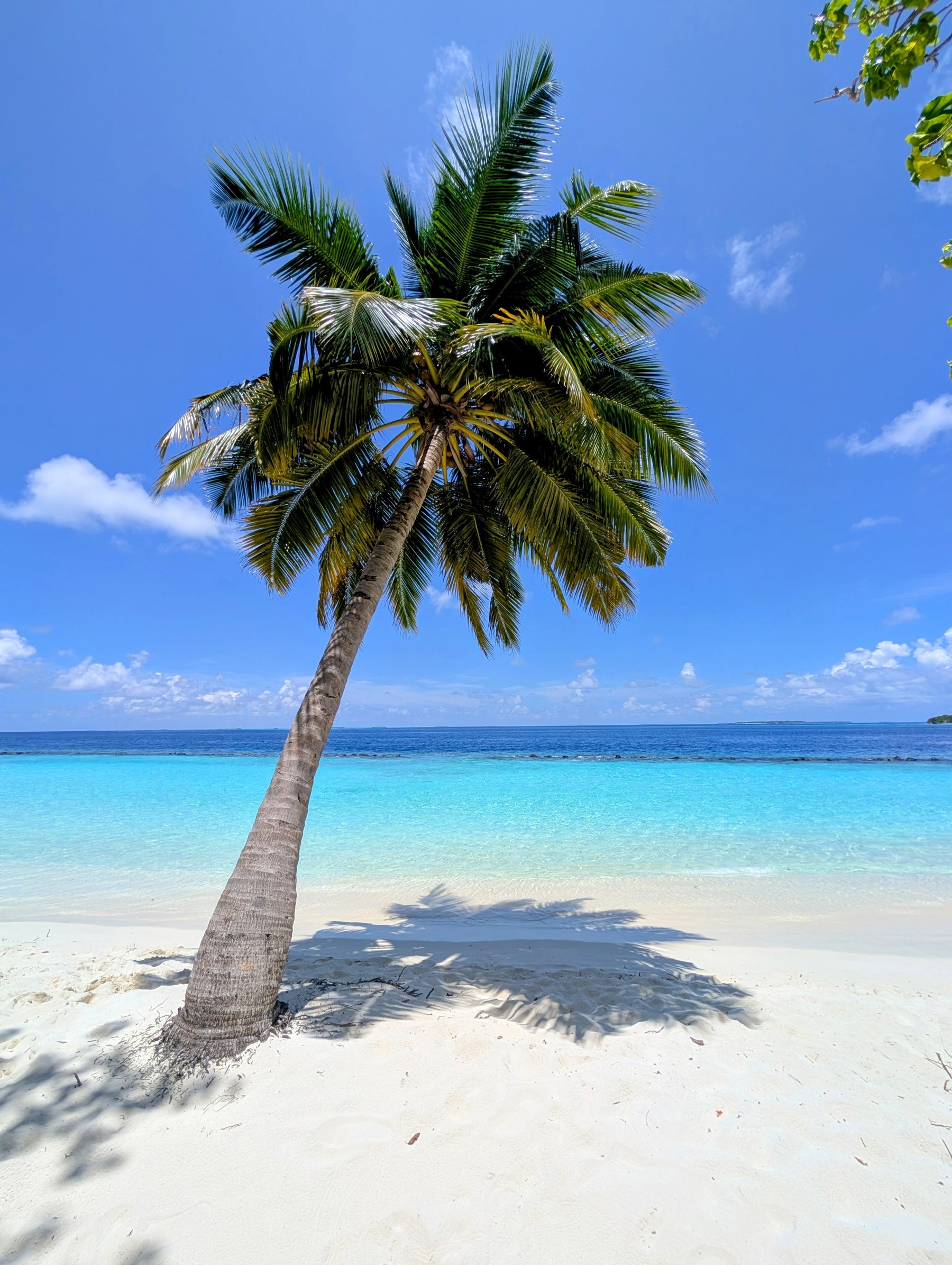
NOVEMBER 2026ON THE COVER · ROYAL ISLAND, MALDIVES
THE QUARTERLY ISSUE · VOLUME 01
London grandeur. A quieter Hampshire. The pull of an island shore.
Travel writing with a sense of place, brought to life through the photographs and stories of STAY.
24 pages · Eight hotel features · Original STAY. photography · November 2026
A CLOSER LOOK
The full-size reader opens two portrait A4 pages side by side on a desktop. Use the page arrows, contents and zoom controls to explore; on a phone, read one page at a time or switch to the text view.
VOLUME ONE · THE QUARTERLY ISSUE
London grandeur.
Hampshire, unhurried.
Islands worth dreaming of.
THE ART OF GETTING AWAY
WELCOME TO STAY.
A city hotel can change the way a weekend feels. A garden can persuade you to put your phone away. A stretch of island shoreline can stay with you long after the journey home. These are the moments we want to make room for.
STAY. brings together our interest in travel, our experience working with creators and the photographs we come back to. This first collection moves between London and Hampshire, Thailand and the Maldives: different places, linked by the pleasure of looking a little more closely.
We want the magazine to give the writing and photography room to work together. To show the architecture as well as the view, the small detail as well as the grand entrance, and the things that make one stay feel different from the next.
We hope you find somewhere here that makes you curious. Turn the page, take your time, and come with us.
The STAY. team
STAY. THE MAGAZINE
THE STAY.
At Kimpton Fitzroy, a grand Bloomsbury address makes a persuasive case for treating the hotel as part of the trip.
A London weekend has a way of filling itself. A museum, a walk, a table booked across town: before long, the hotel becomes the place where the bags are left and the day ends. Kimpton Fitzroy asks for a little more of your attention. Its setting on Russell Square puts the city within reach, but the building gives you a reason to pause before heading out.
The exterior does the introductions. Carved stonework surrounds the entrance, with warm brick above it and black canopies carrying the Fitzroy name. It is an address with presence, set against the quieter rhythm of Bloomsbury rather than the rush of a shopping street.
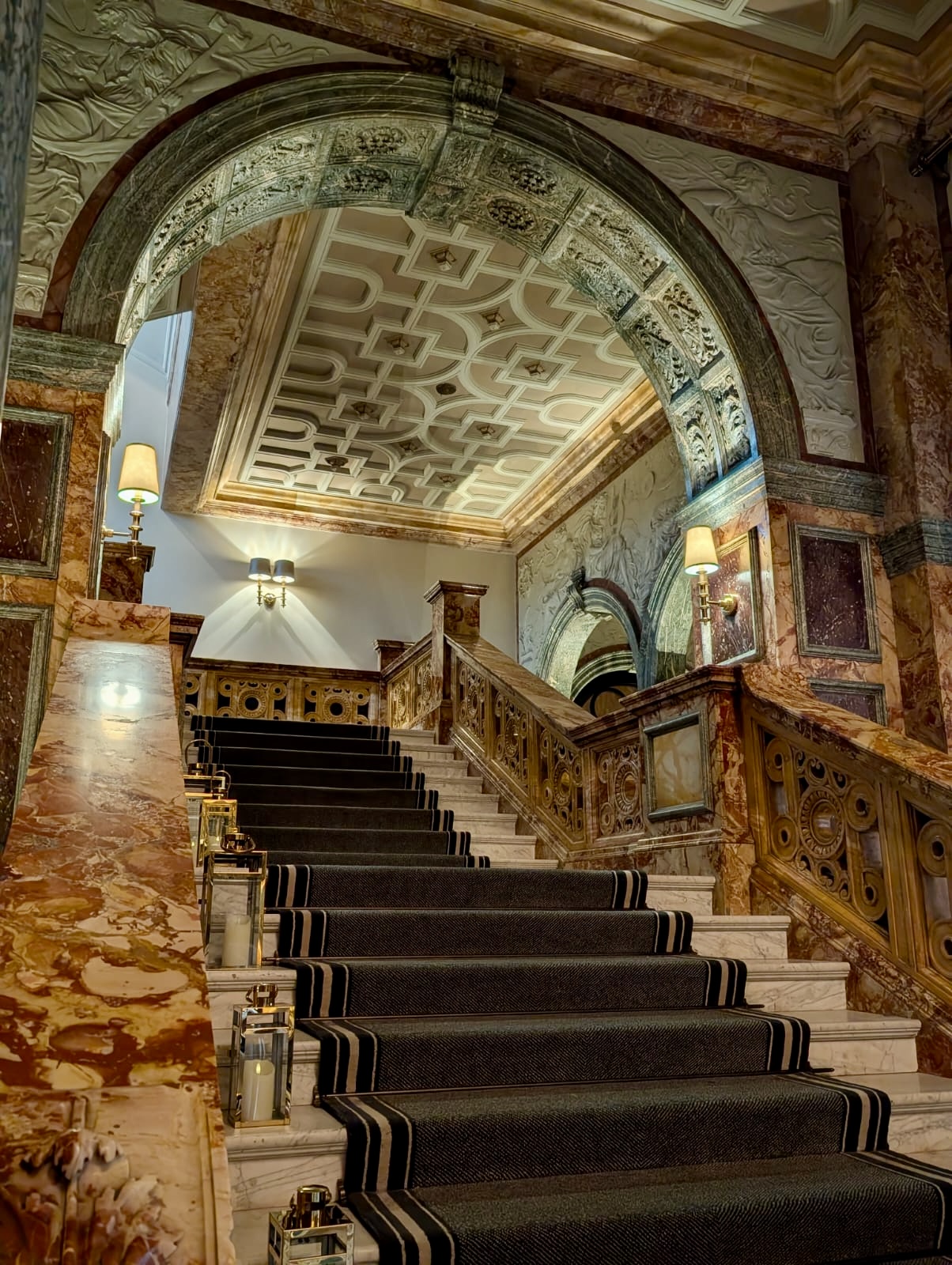
Inside, the staircase is the image that holds the story together. The sweep of the balustrade, patterned marble and richly worked ceiling make the route upstairs feel like part of the visit. There is a lot to look at, but the interest lies in the materials and workmanship rather than a succession of decorative statements.
The palette softens that formality. Greens, creams and warm stone carry through the architectural details; upholstery and lighting bring the scale back towards the guest. The contrast is important. A historic hotel can be impressive without being a comfortable place to spend time. Here, the attraction is the possibility of having both.
For a family city break, that balance of grandeur and ease matters. The strongest idea is also the simplest: the return to the hotel should feel like part of the pleasure of the day. There should be somewhere to settle, put down the guidebook and enjoy being in London without needing to go straight back outside.
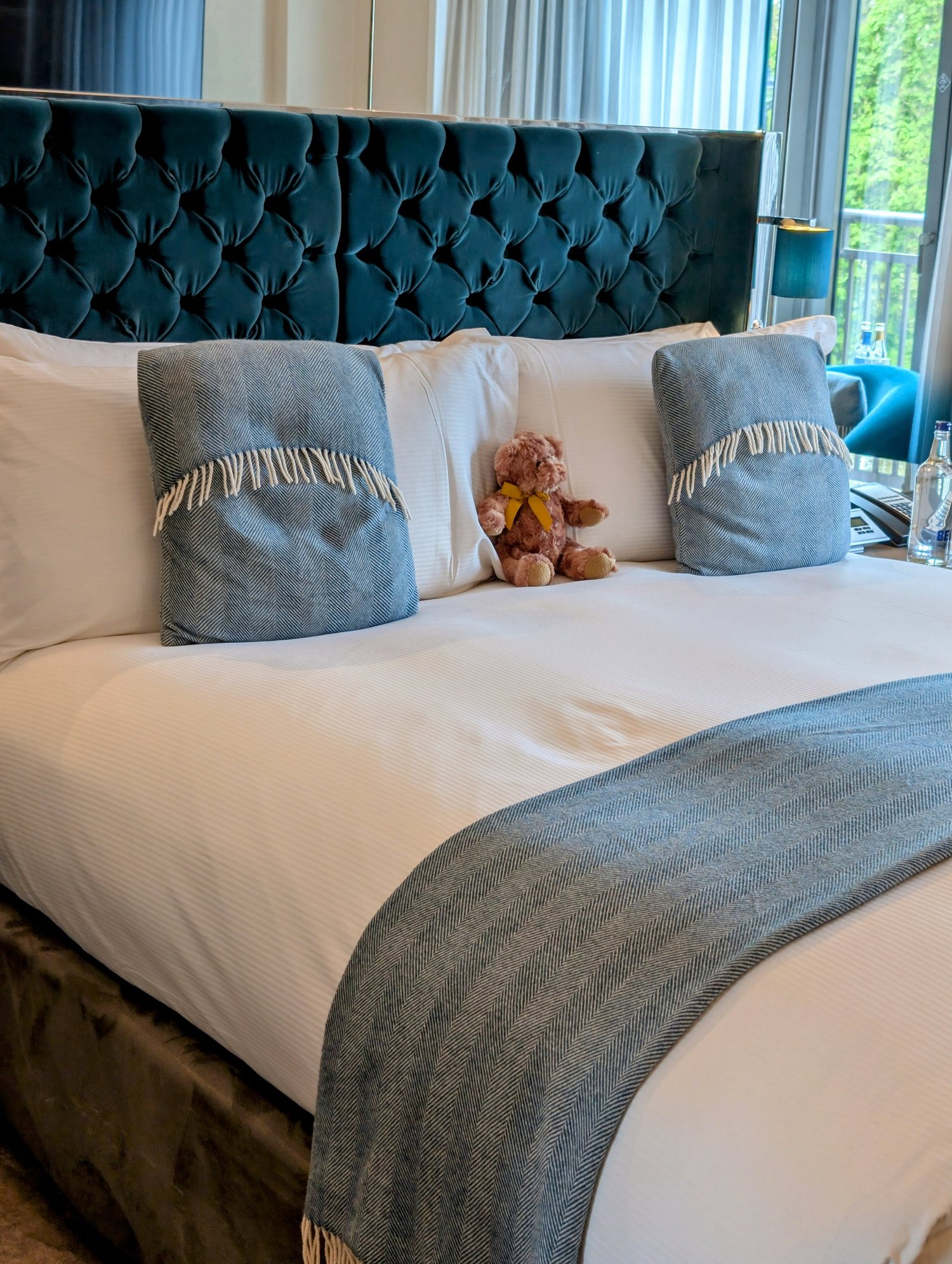
A good city room needs to do more than photograph well. After a full day, space to sit and the way the bedroom connects to the bathroom become more useful than a long list of amenities. For families, comfort and enough room to unwind are central to the appeal: somewhere to sit together, rather than simply a place to sleep.
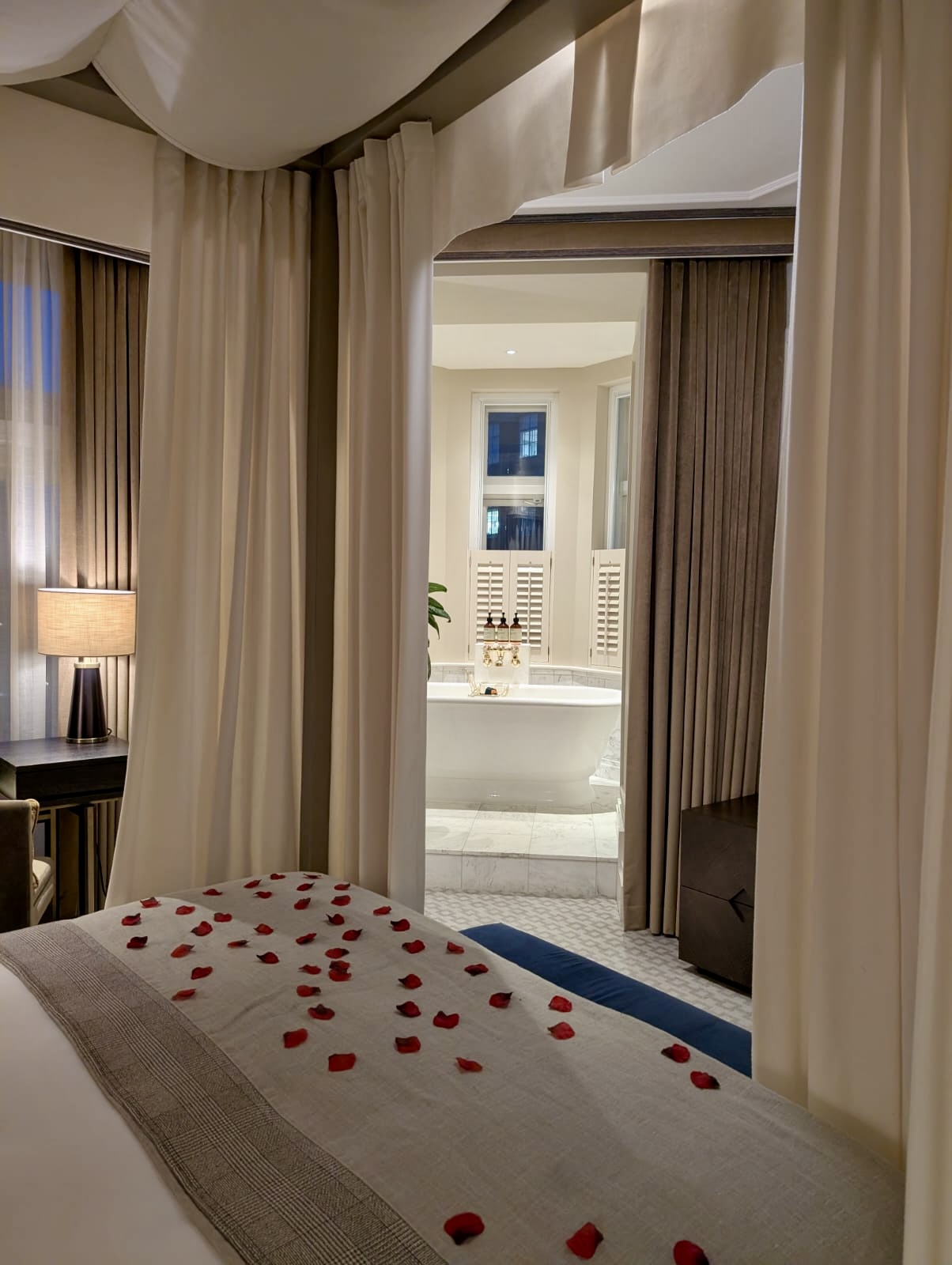
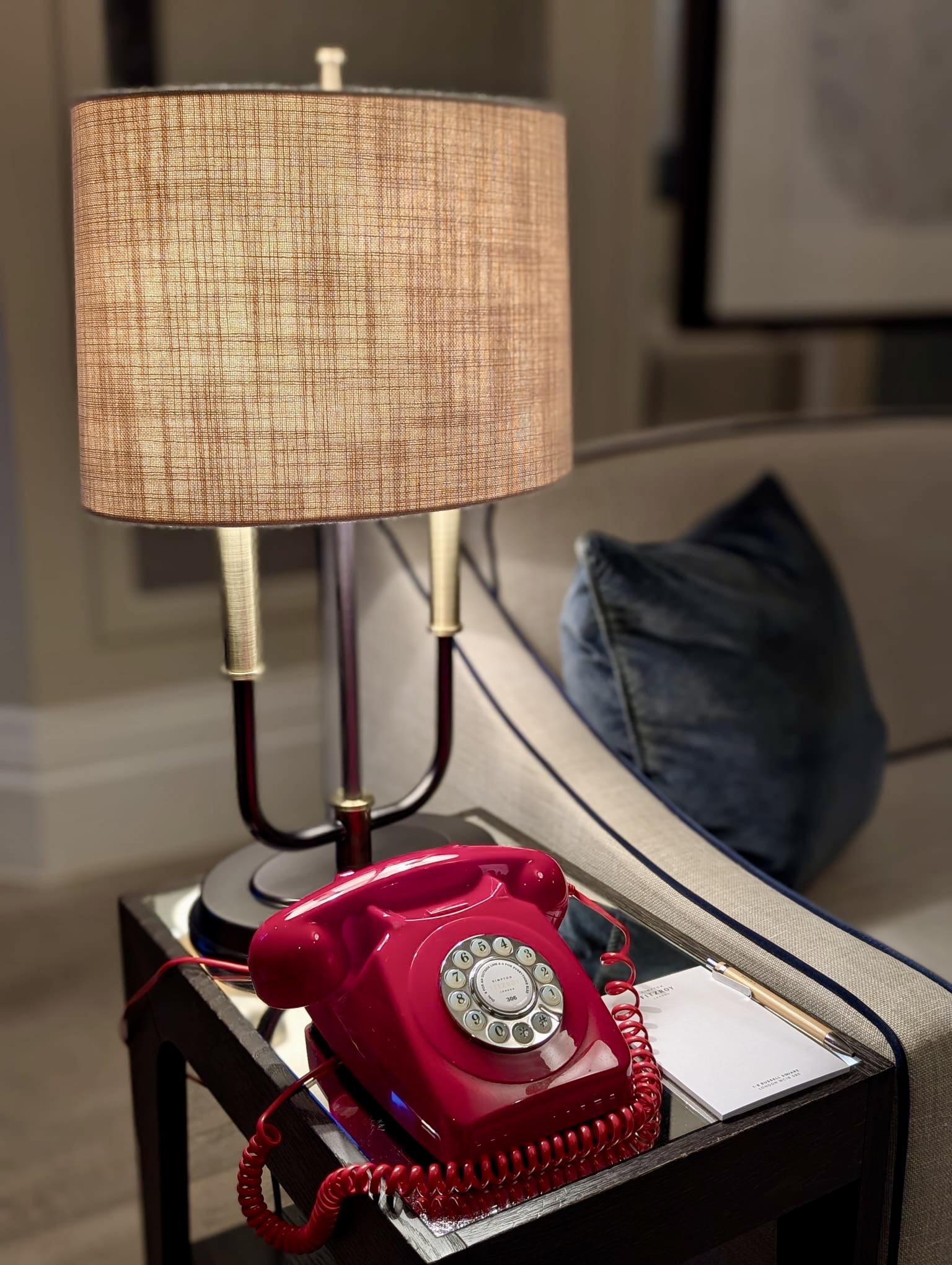
The smaller details bring the mood into focus. There is a red telephone beside a shaded lamp, a bathroom seen through open curtains, pale stone around a deep bath and brass fittings against white shutters. These are details to notice at the end of the day, rather than features that demand an itinerary of their own.
Room categories and layouts differ, so a family should choose for the way it will actually use the space. Confirm the sleeping arrangements, any connecting-room requirement and the details that matter to your party when booking. A beautiful photograph introduces a room; the right configuration makes it work for the stay.
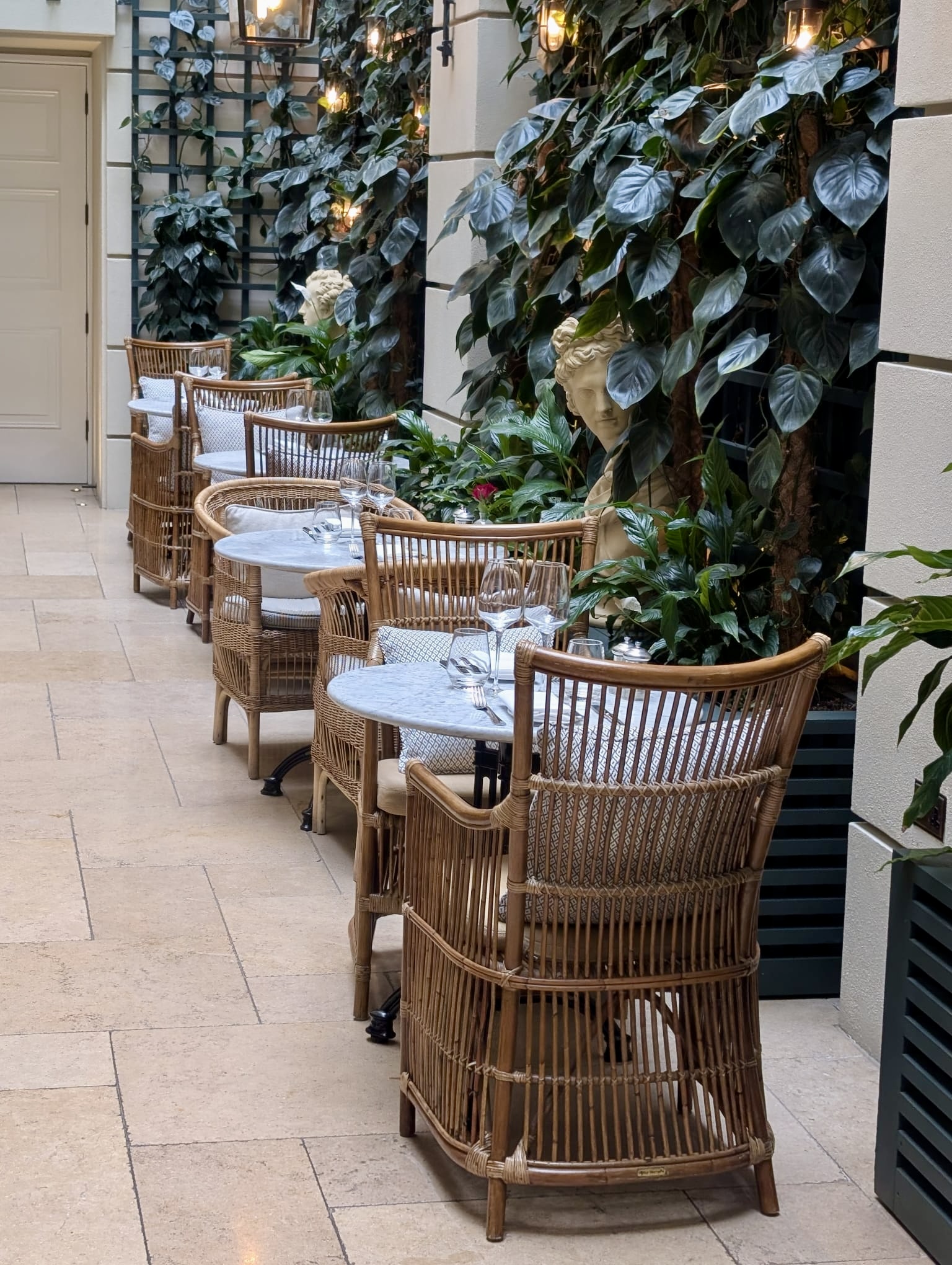
Palm Court offers another kind of retreat: a row of tables, woven chairs and planting climbing into the space above them. After the more elaborate architectural rooms, the greenery changes the register. It is a useful contrast within a hotel whose public spaces are part of its character.
The dining spaces give another reason to leave part of the day unscheduled. Fitz’s Brasserie serves British dishes across breakfast, lunch and dinner, while Fitz’s Parlour offers a setting for coffee or an aperitif. In-room dining adds another option after a day out. The choice matters on a family break: an evening need not always mean setting off across London again. These are useful possibilities, rather than a substitute for checking the current menus and arrangements for your own stay.
Russell Square gives the address a clear starting point. The British Museum and the wider Bloomsbury neighbourhood belong naturally in a stay here; the West End and Covent Garden offer a different direction when the day calls for theatre, shops or a longer walk. Not every outing needs to become a journey across the capital.
The case for Kimpton Fitzroy is the relationship between those two experiences: a recognisable London outside, and a distinctive building to return to. The staircase gives it ceremony. The smaller room details give it warmth. Together, they make a city break feel less like a list of things to do and more like somewhere you have chosen to stay.
A CLOSER LOOK
A London address for travellers who want the building, the neighbourhood and the quieter moments between outings to be part of the story.
Original photography from the STAY. collection. Room styling is shown as photographed; arrangements vary by room and booking.
THE ATHENAEUM
A Mayfair address with the comfort of a home base, from window-side seats to private townhouse residences.
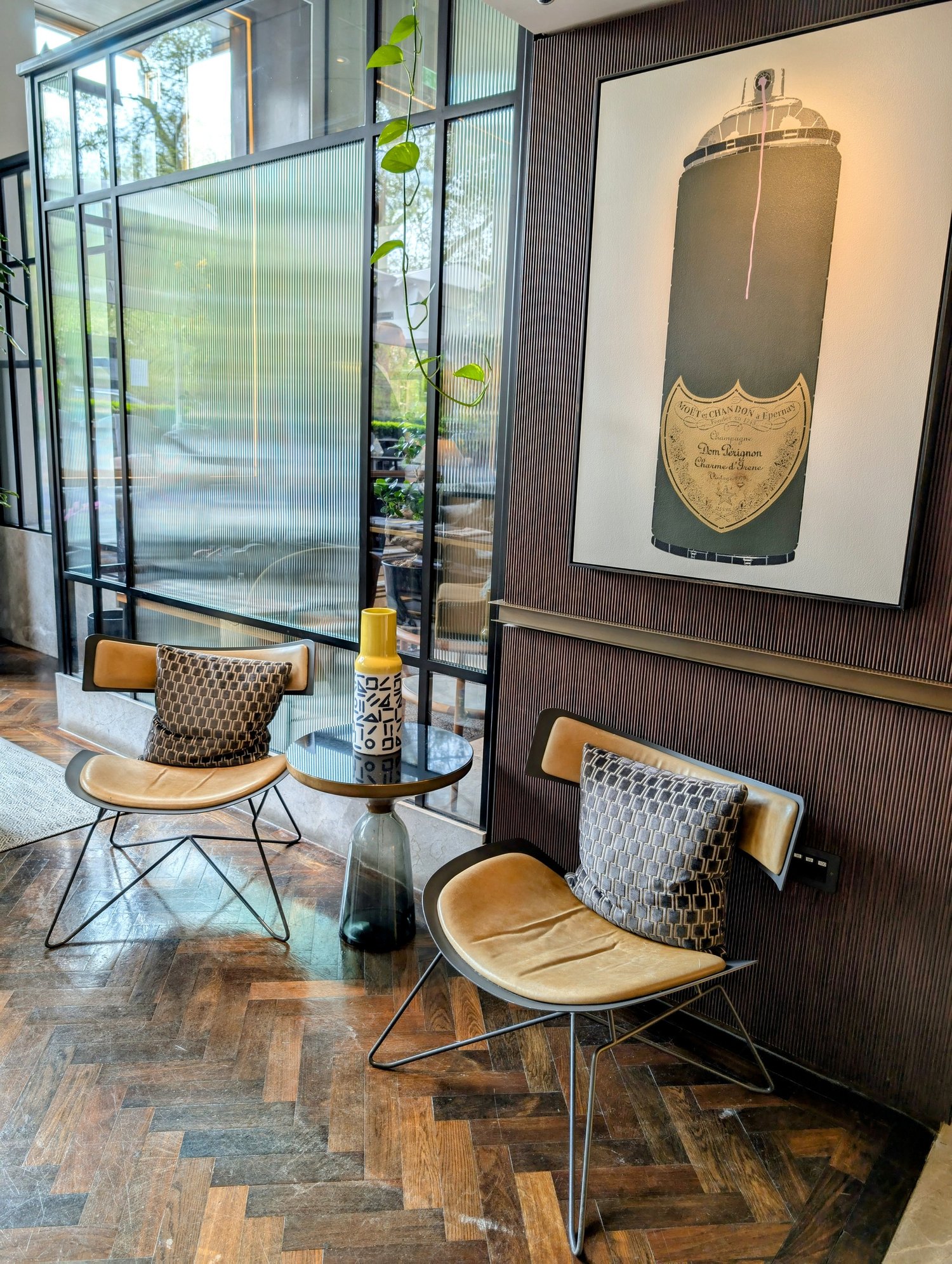
The Athenaeum’s living wall brings an unexpected patch of green to Piccadilly. Behind it, this independent, family-run hotel combines a Mayfair address with interiors that balance Art Deco references and contemporary design. The effect is more welcoming home base than ceremonial arrival.
The townhouse residences extend that idea. Separate entrances, kitchens and living spaces make them an alternative to a conventional hotel room, particularly for a longer visit or a family stay. They retain the support of the hotel while giving guests more control over the day. In a part of London associated with grand addresses, that practical sense of comfort is a useful distinction. The city is outside; there is room to settle in.
A CLOSER LOOK
The location puts Buckingham Palace and the parks within the surrounding city itinerary. There is plenty to go out for, but the hotel also supplies reasons to return: seasonal British cooking at 116, drinks in the bar, and spaces designed for a quieter pause.
A spa, hot tub, sauna, steam room and gym add another side to the stay. For visitors moving between sightseeing, work and time with family, the value is in having a comfortable base that can accommodate those different days. The Athenaeum does not need to compete with London for attention. Its role is to make the city easier to enjoy, then offer somewhere familiar to come back to when the walking is done.
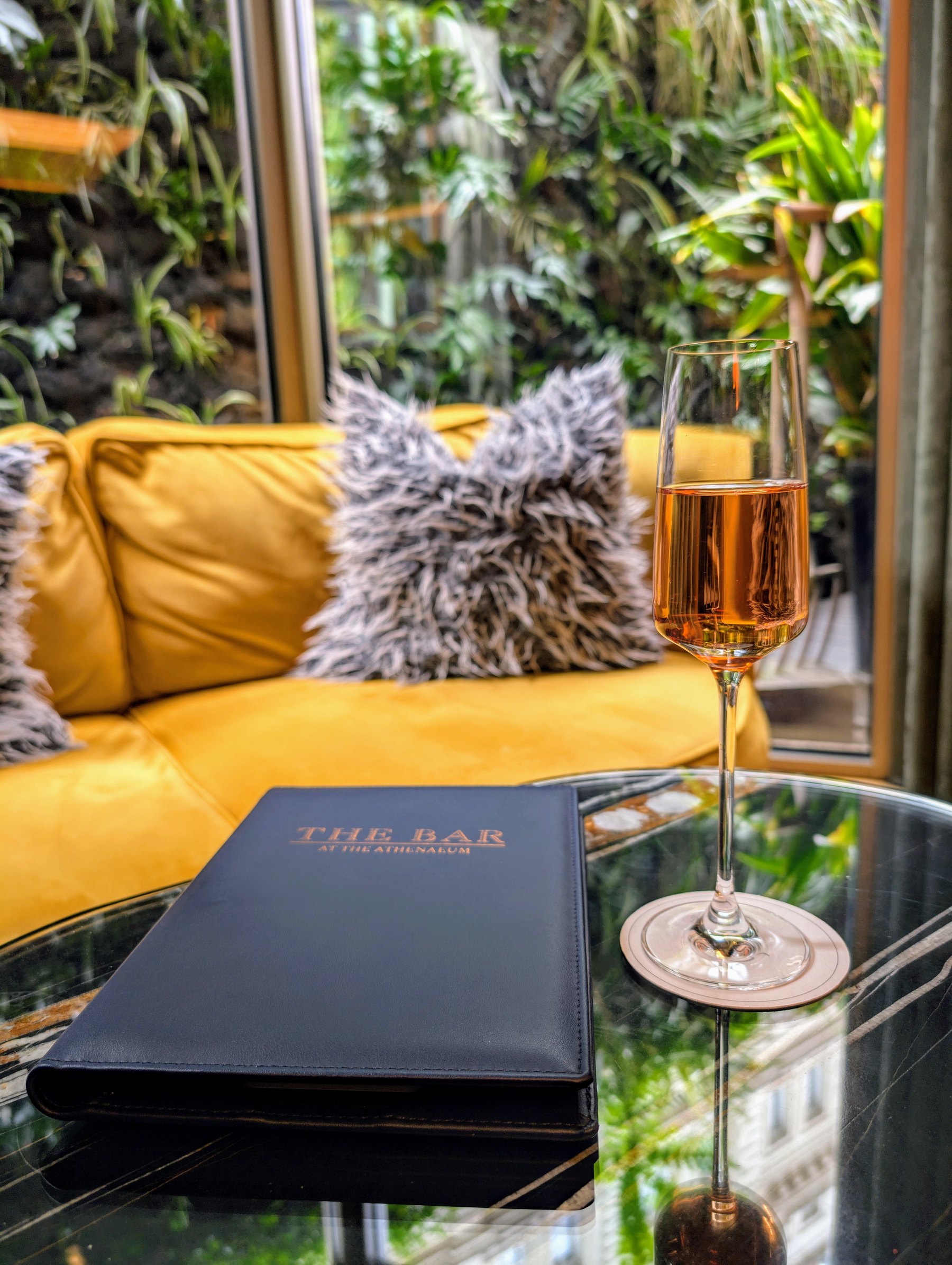
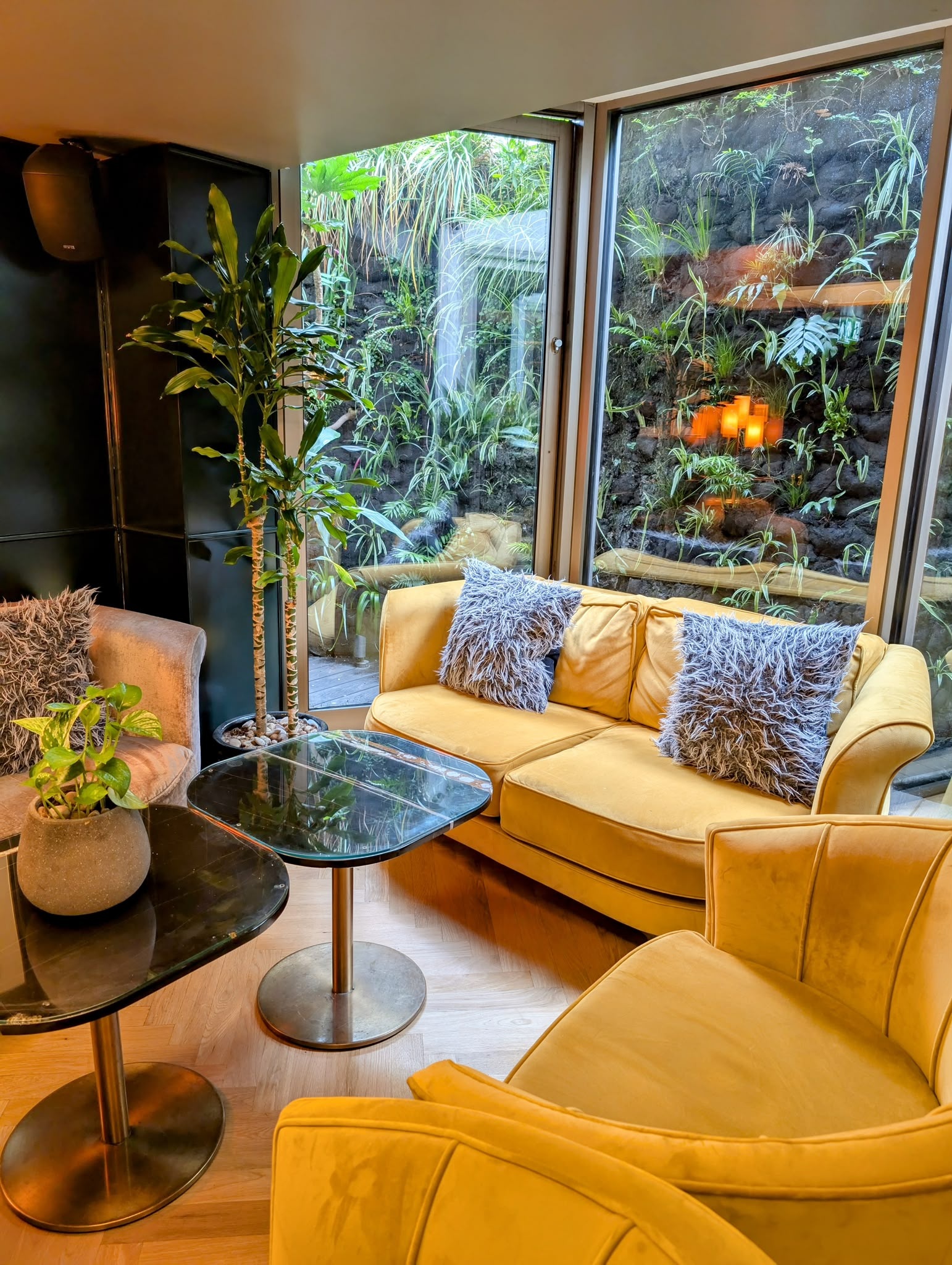
The photographs show the softer side of the address. A yellow sofa sits beside the window, its velvet and patterned cushions set against greenery outside. A book and a glass on the small table make the scene feel domestic rather than formal. It is an inviting contrast to the pace of Piccadilly: a place to sit and look out before deciding what the rest of the day should hold.
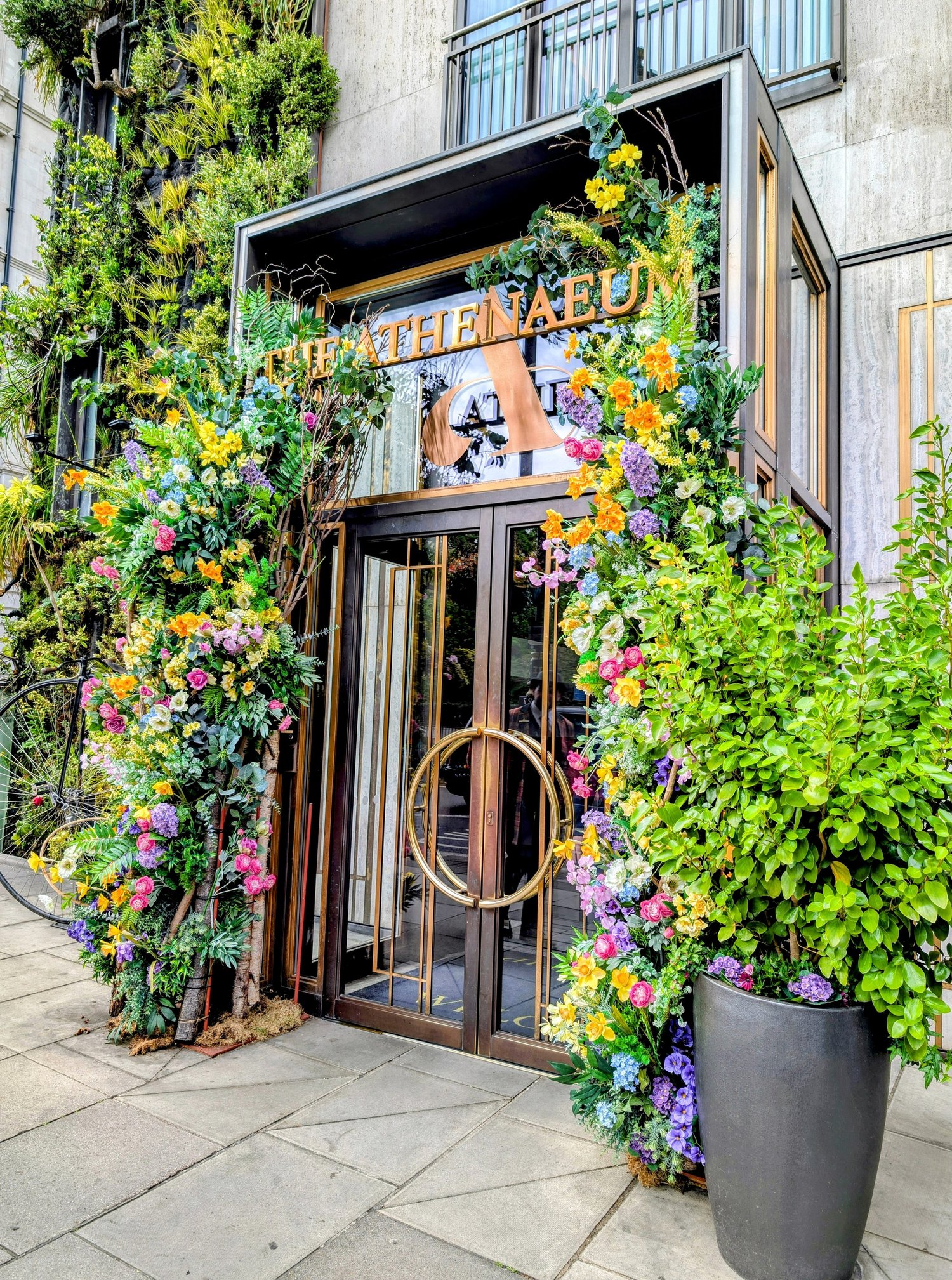
At the entrance, planting and flowers frame the doors, continuing the connection between the hotel and the greenery around it. The appeal of the residences follows a similar principle. A private entrance and a kitchen change the way a London visit works: breakfast can be unhurried, and returning after a day out can feel like coming home. For a longer stay, those practical comforts can matter as much as a grand public room.
Tylney Hall
A country-house stay whose best invitation is to slow down and step outside.
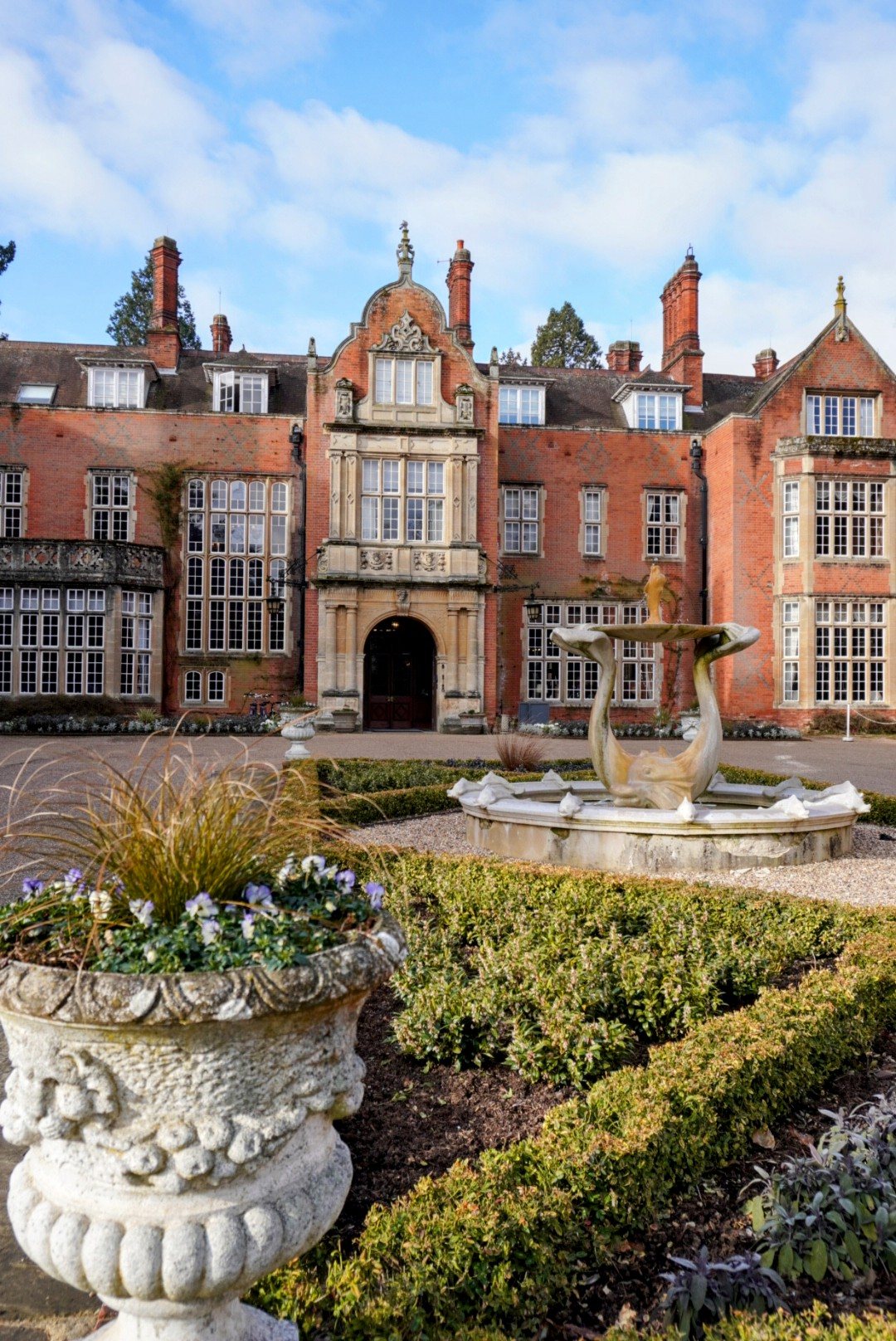
The approach to Tylney Hall sets the tone: a winding drive, mature greenery and the broad façade of a Hampshire country house. The grounds give the building space to breathe, and the arrival is as much about the landscape as the architecture.
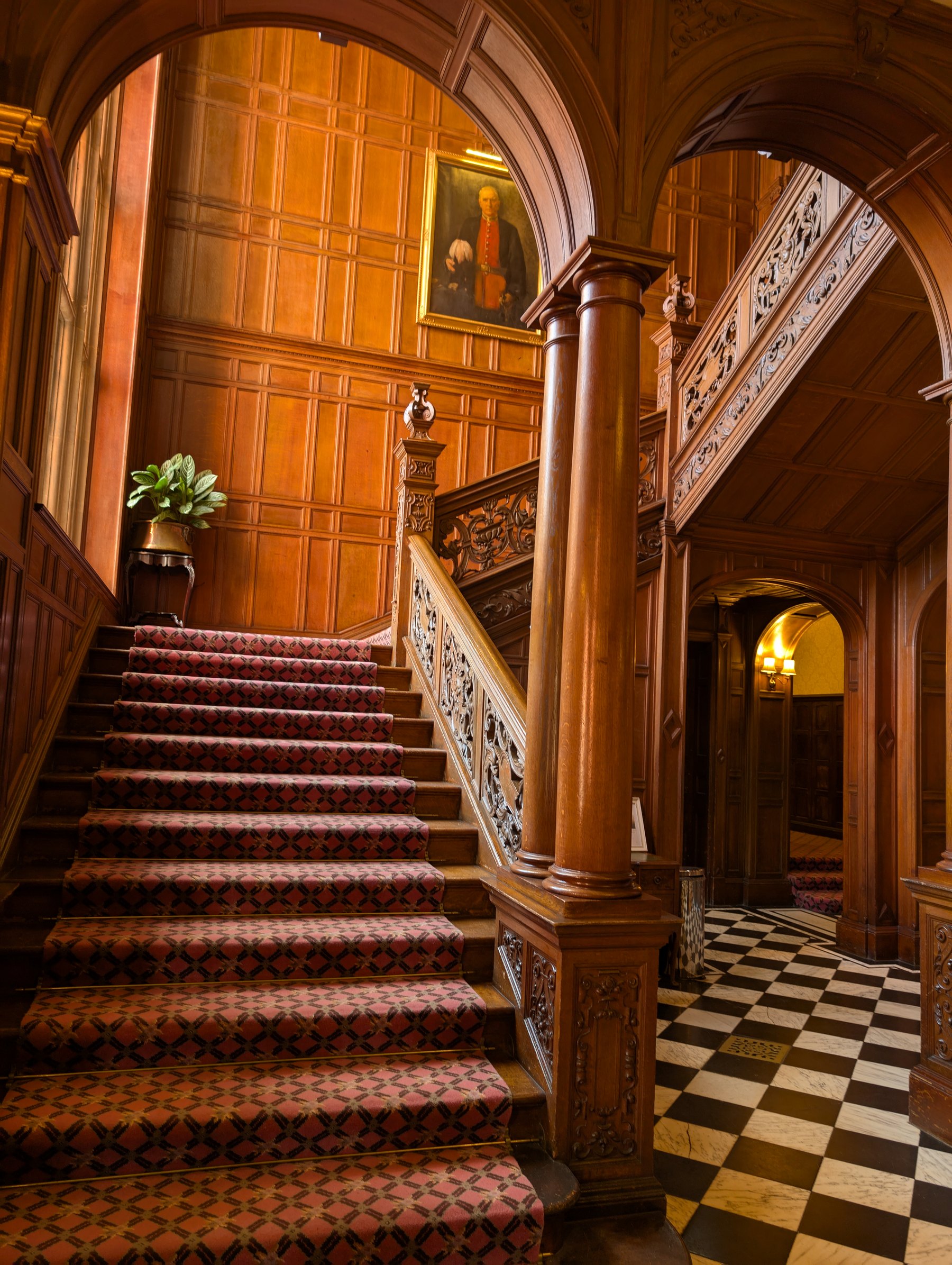
Inside, decorated ceilings, wood panelling and traditional furnishings continue the country-house character. Rooms and suites look towards the gardens and surrounding countryside, making the view part of the accommodation rather than an extra to seek out. The original photographs move between formal interiors and outdoor spaces, showing a hotel that rewards spending time in both. It is a stay for making use of the house, then stepping outside to see what lies beyond it.
A CLOSER LOOK
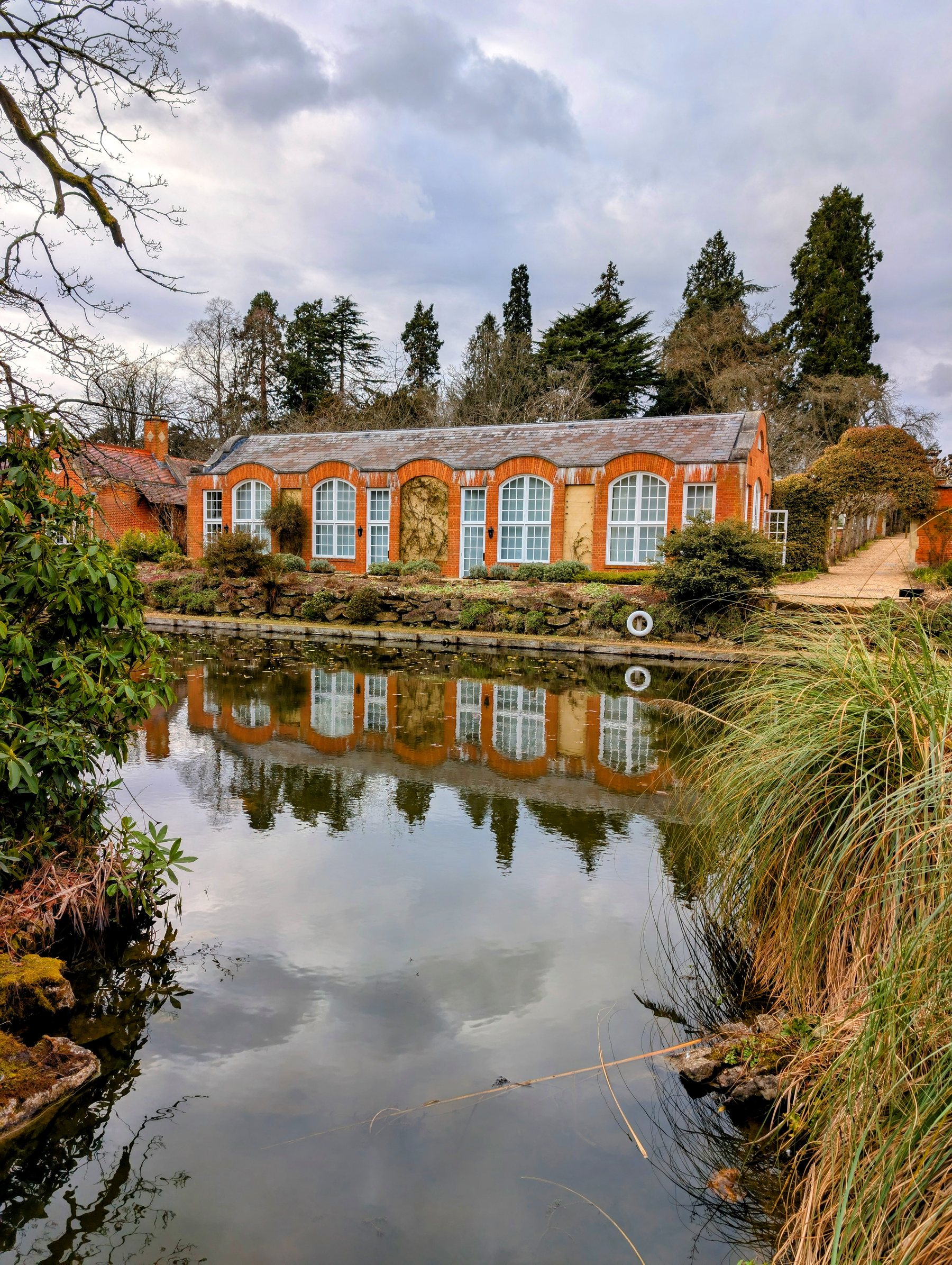
The gardens are a reason to explore without setting a destination. Water, planting and pathways create changes of scale as you move away from the main house. A walk can be a short interval before lunch, or become the afternoon’s main event.
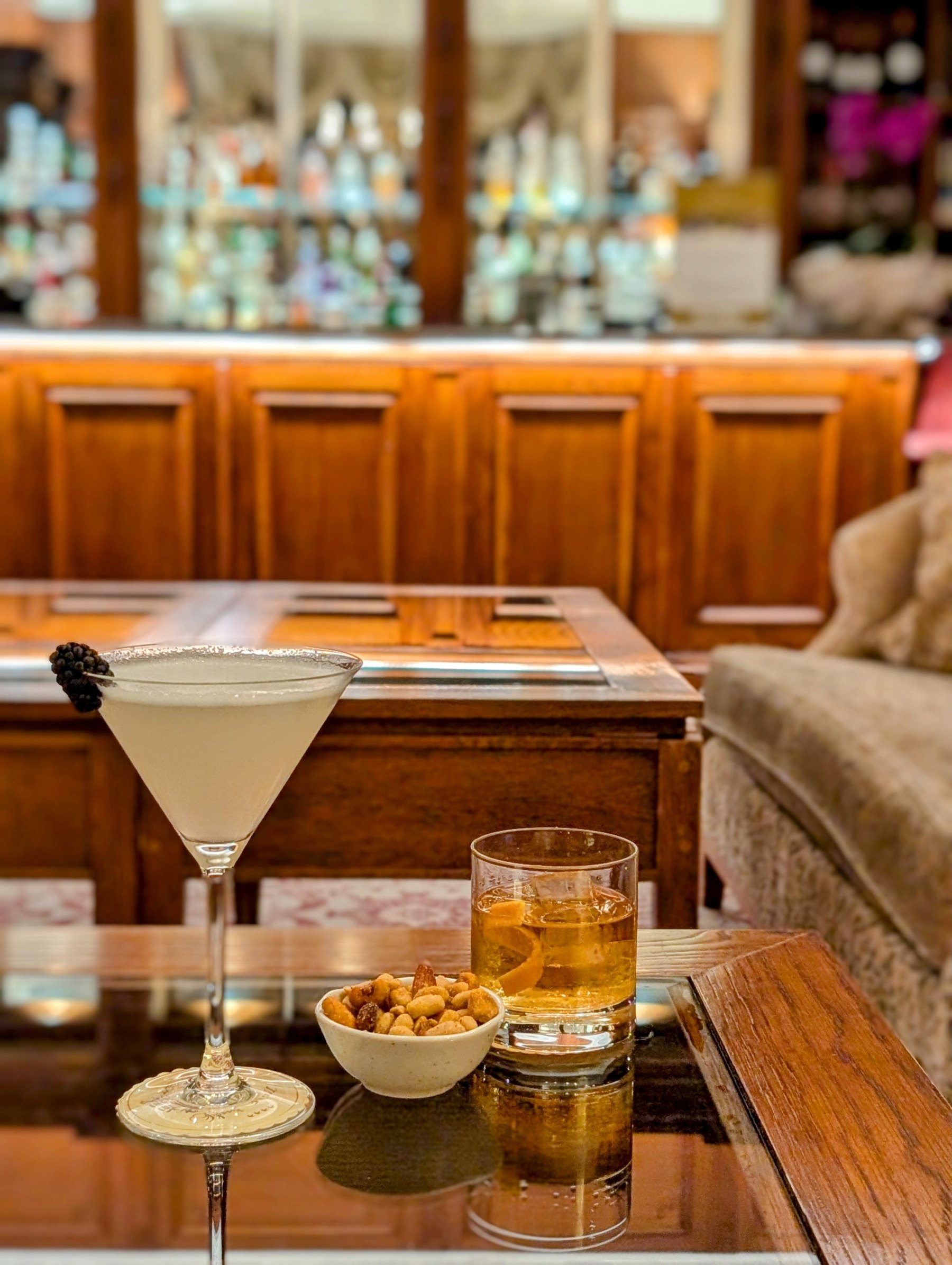
The Oak Room brings dining back into the house, with its panelling and ornate ceiling adding to the setting. The lounge and terrace offer more informal alternatives for refreshments and a pause overlooking the grounds. Tylney Hall’s appeal is in that sequence: arrive through the landscape, settle into the building, and go back outside. There is no need to turn a country-house stay into a long list of activities when the house and garden already supply its shape.
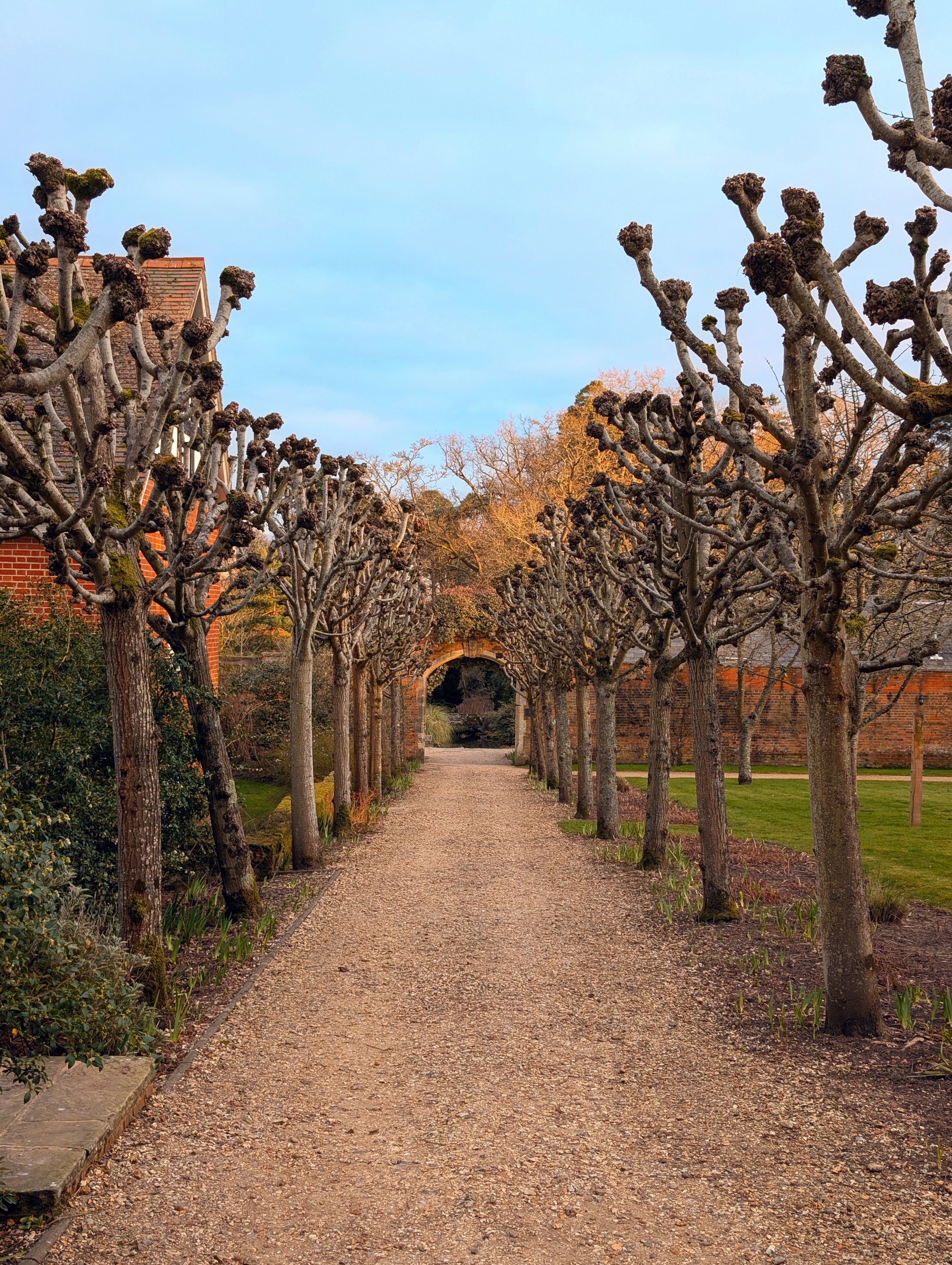
The garden walk is one of the defining images of this stay. Pollarded trees stand along a gravel path, drawing the eye towards the distance; the arrangement is formal, but the invitation is simply to keep walking. Elsewhere, water and softer planting change the mood. The pleasure is in moving between the two, finding a different view of the house and letting a walk take longer than expected.
There is a satisfying contrast between the scale of the house and the smaller rituals it accommodates. A drink after a walk, a table for two, a quiet hour before dinner: these give the grand setting a human rhythm. The staircase photograph catches the same idea in miniature, with polished wood, warm light and a turn that makes you curious about what comes next.
Royal Island
On Royal Island, shaded paths and an open horizon make a compelling case for doing less.
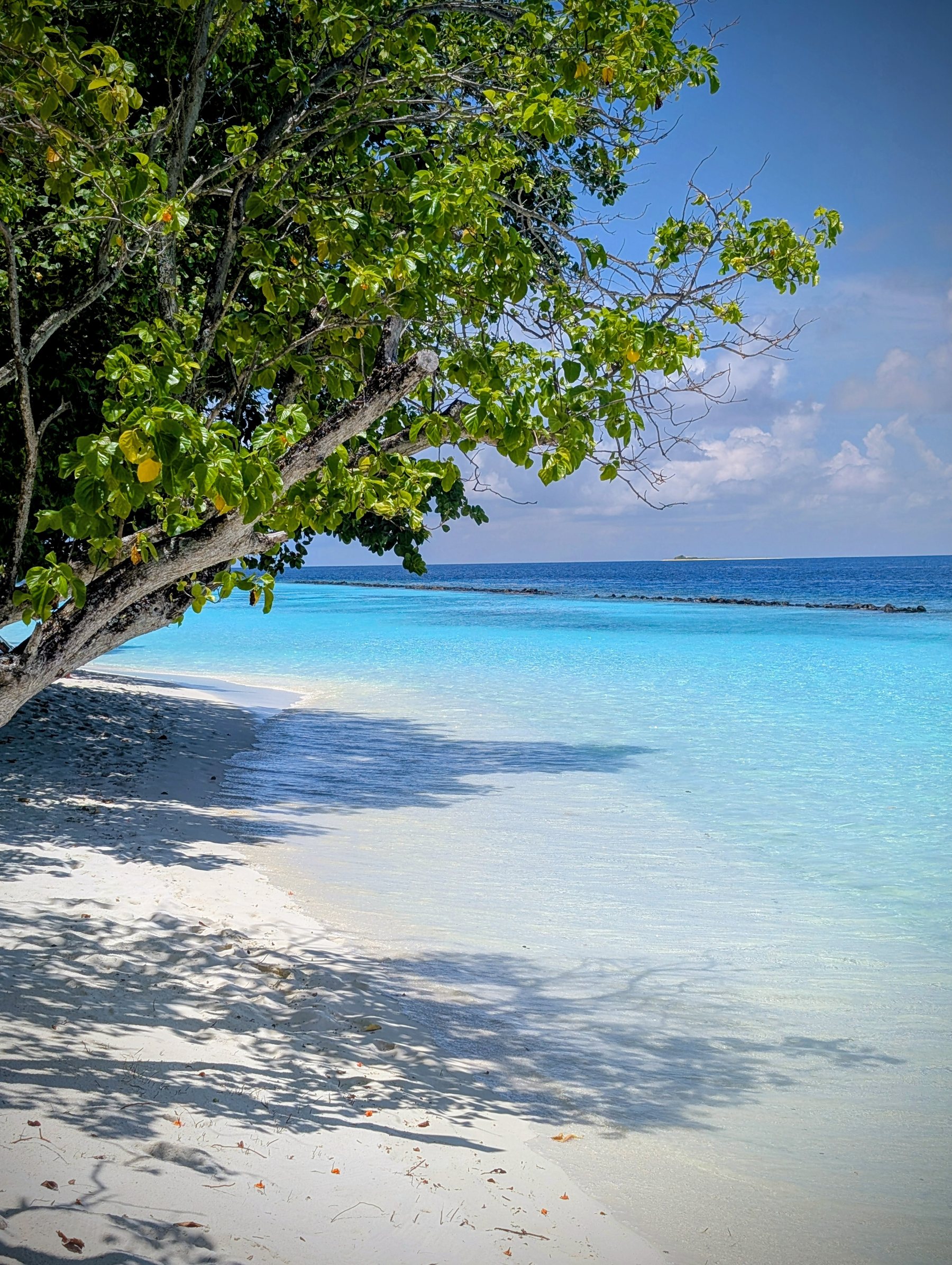
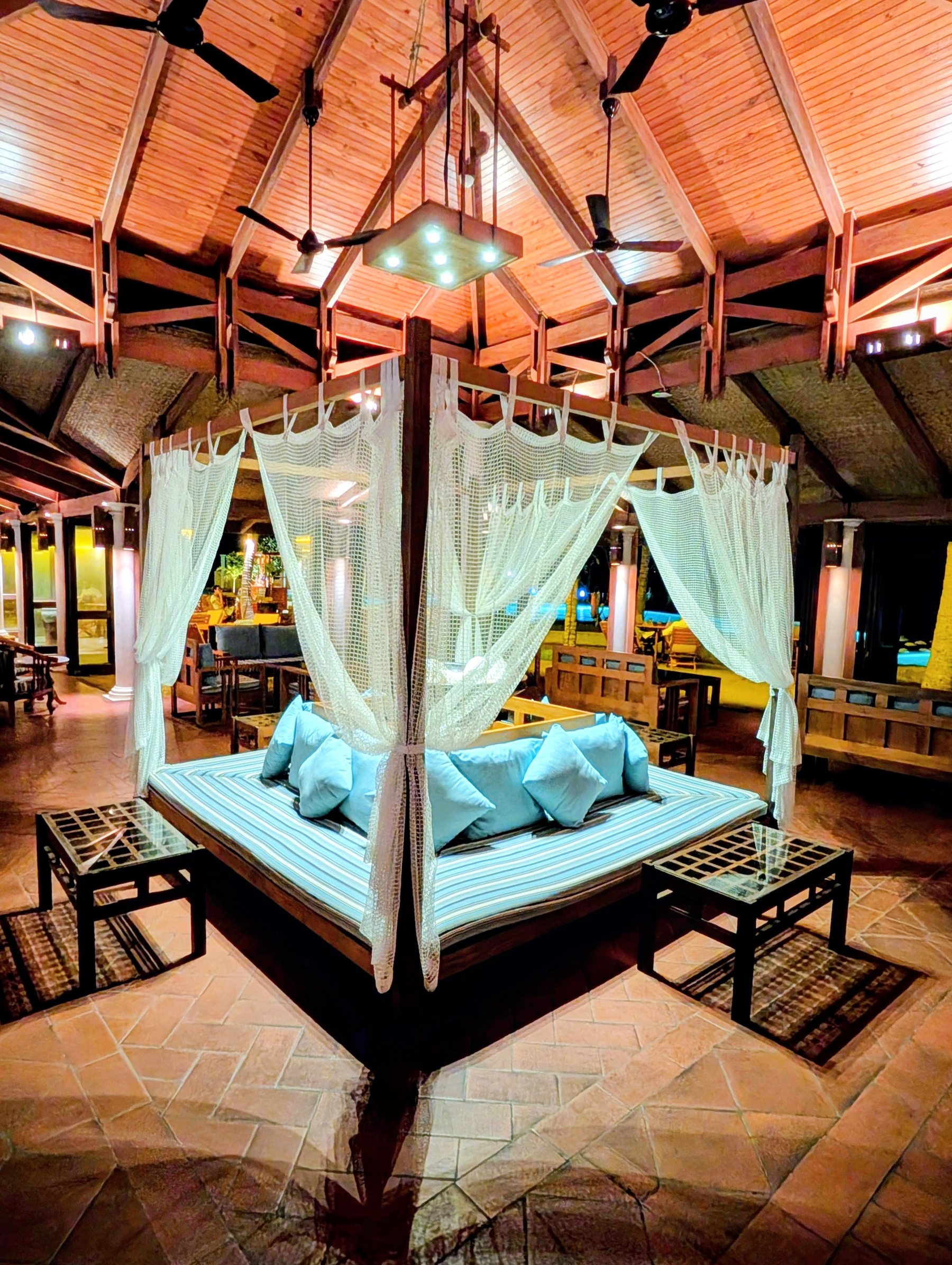
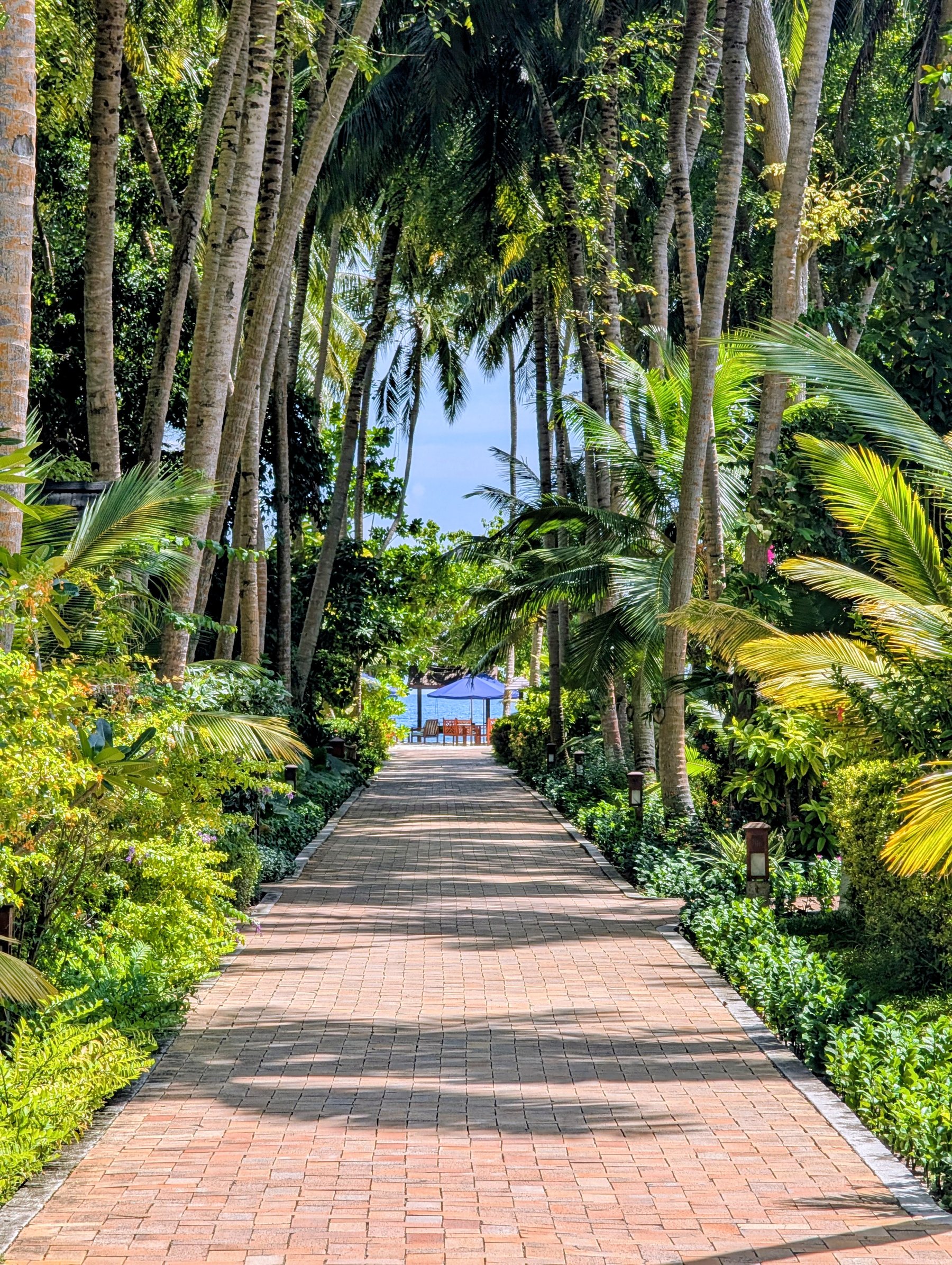
On Royal Island, the path to the beach is part of the experience. Tropical planting gives way to pale sand and the lagoon; the villas sit around the shore, keeping the water close. It is a Baa Atoll stay that makes a persuasive case for slowing down.
Teak, soft lighting and private outdoor spaces give the accommodation a warm, understated character. Beyond the villas, paths through the island create an alternative to spending the entire day on the beach. The photographs tell that story clearly: palms, shaded walkways and open water. Royal Island’s appeal is in the relationship between those spaces, and the ease with which a day can move between them.
A CLOSER LOOK
The house reef brings snorkelling into the rhythm of the stay, while DiveOceanus offers a more structured way to explore underwater. Hanifaru Bay is another draw in the area, known for seasonal marine gatherings. Any wildlife encounter remains a possibility, rather than something a holiday can promise.
Inland, Araamu Spa sits among the greenery. Kayaking, paddleboarding and games on land offer more active hours, with dining and sunset drinks providing gentler punctuation. The attraction is having those choices without needing to fill the day. A morning in the sea can lead to lunch, a walk through the gardens and an afternoon with very little on the agenda. The island works best when there is time simply to notice it.
The beach is the obvious destination, but the walk towards it deserves a little attention. In the photographs, a brick path runs beneath a canopy of palms, the trunks creating a rhythm that continues into the distance. Then the shade breaks and the colour changes: green foliage, pale sand, blue water. It is a simple transition, and one that gives the island much of its character.
A beach holiday need not be measured by how many activities fit between breakfast and dinner. Here, the interest is in returning to the same places at different times: a stretch of sand in the morning, a shaded path later on, the shore as the light begins to soften. The setting rewards that familiarity. It is the kind of stay where leaving room in the day can feel more valuable than adding another excursion.
VILLA NAUTICA
Clear water, open-air spaces and a sociable island rhythm in North Malé Atoll.
Villa Nautica brings a lively mood to North Malé Atoll. Beach villas, over-water accommodation and larger suites offer different ways to live beside the lagoon. Some places open onto the sand; others put a sun deck directly above the water.
For families and groups, that range is part of the attraction. The resort’s larger suites and pool options create space to spread out, while the shared restaurants, bars and poolside areas keep the island sociable. The setting invites the familiar Maldivian pleasures of clear water and palm shade, but the atmosphere is as much about getting involved as finding a quiet corner. Choose the room style around the kind of island day you want.
A CLOSER LOOK
The lagoon is a starting point for water sports, snorkelling and diving, with DiveOceanus providing a route into the underwater side of the stay. Excursions add another way to explore beyond the beach, while the children’s club gives younger guests an island programme of their own.
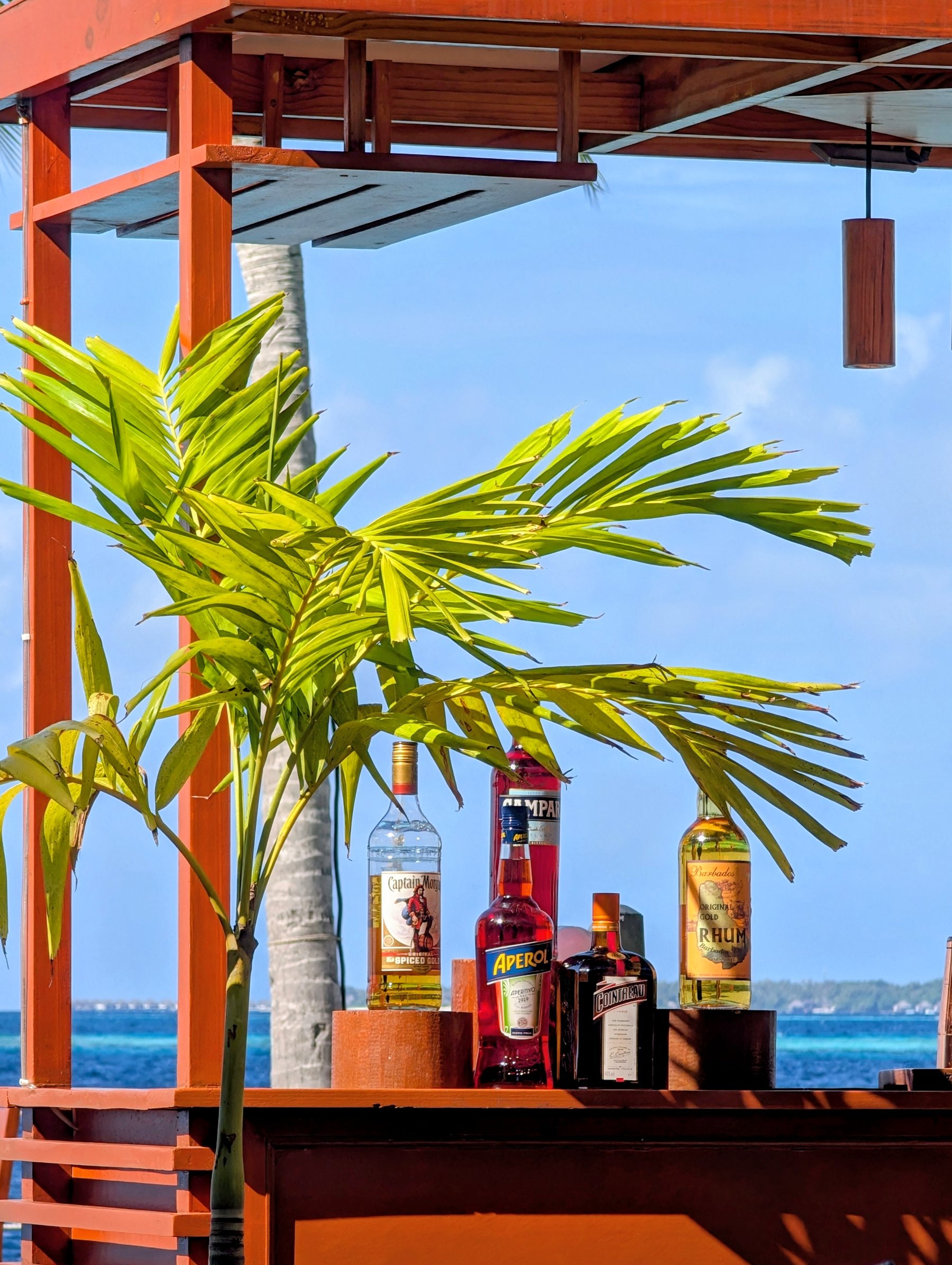
Back on land, Araamu Spa offers a change of pace among the greenery. Dining ranges across seafood, Maldivian flavours and international cooking, with bars and waterside spaces carrying the day into sunset. Villa Nautica suits travellers who want choices close at hand: a morning in the water, time by the pool, and somewhere different to sit down for dinner. The island can be a playground without every hour needing a plan.
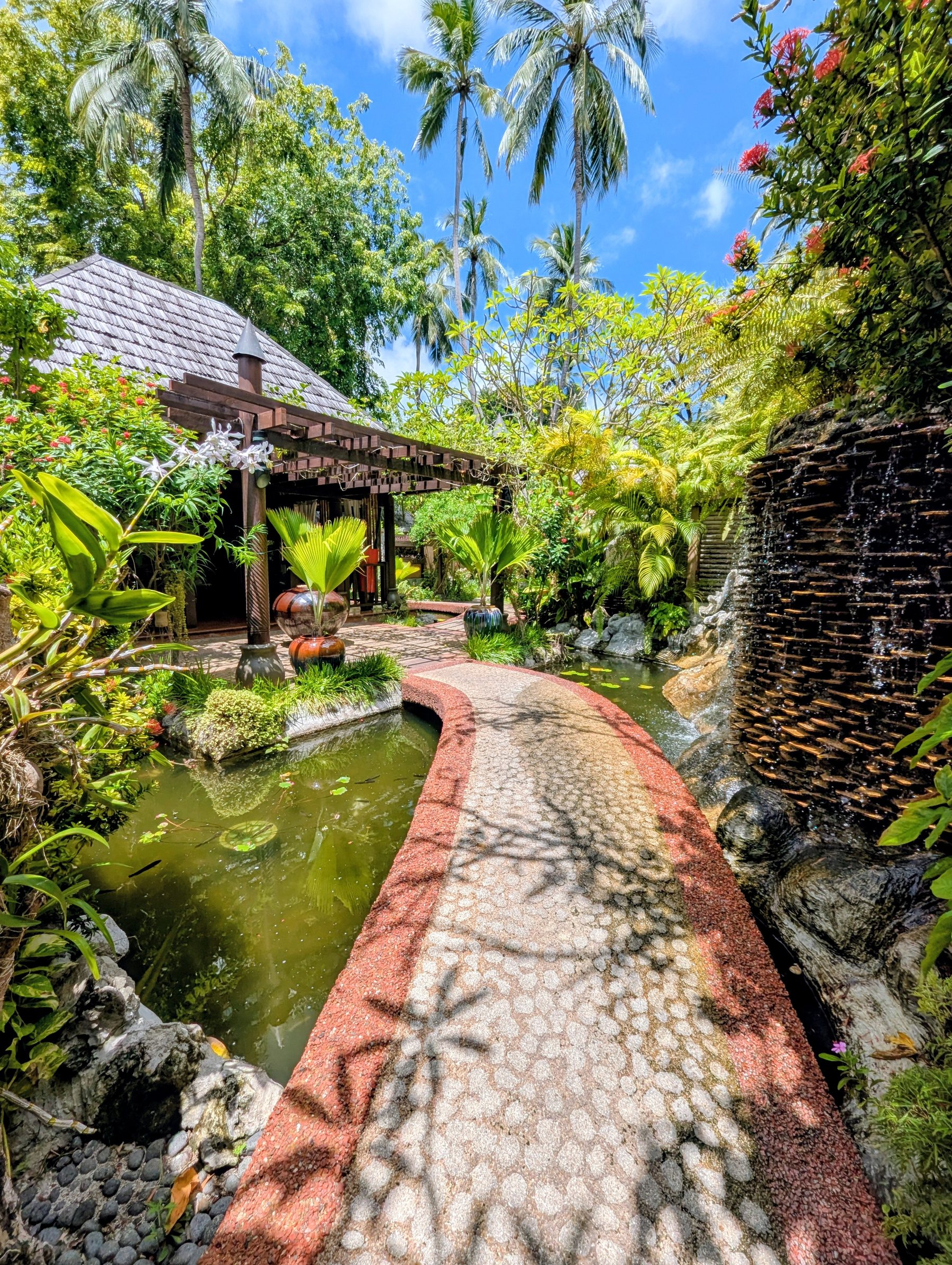
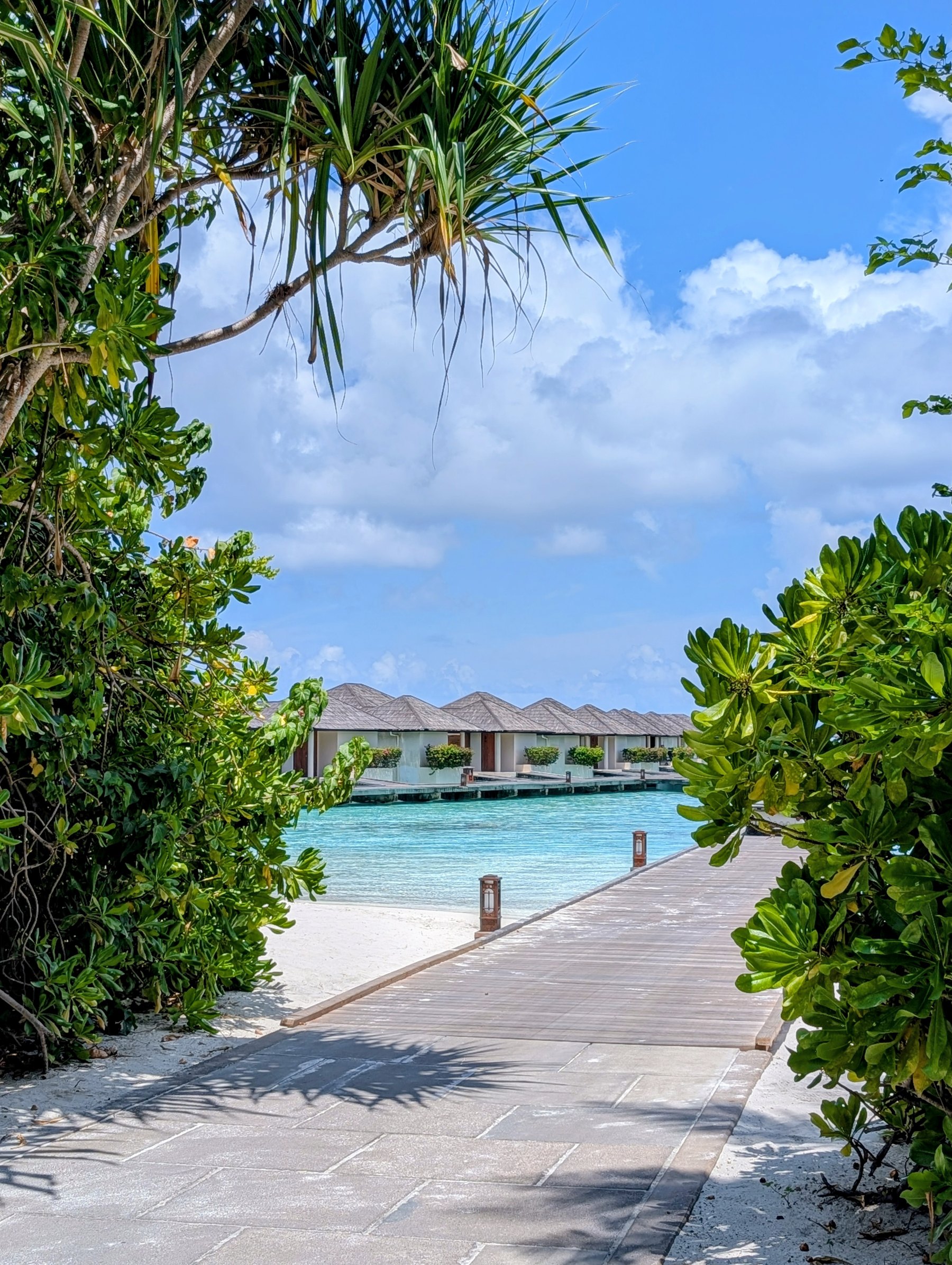
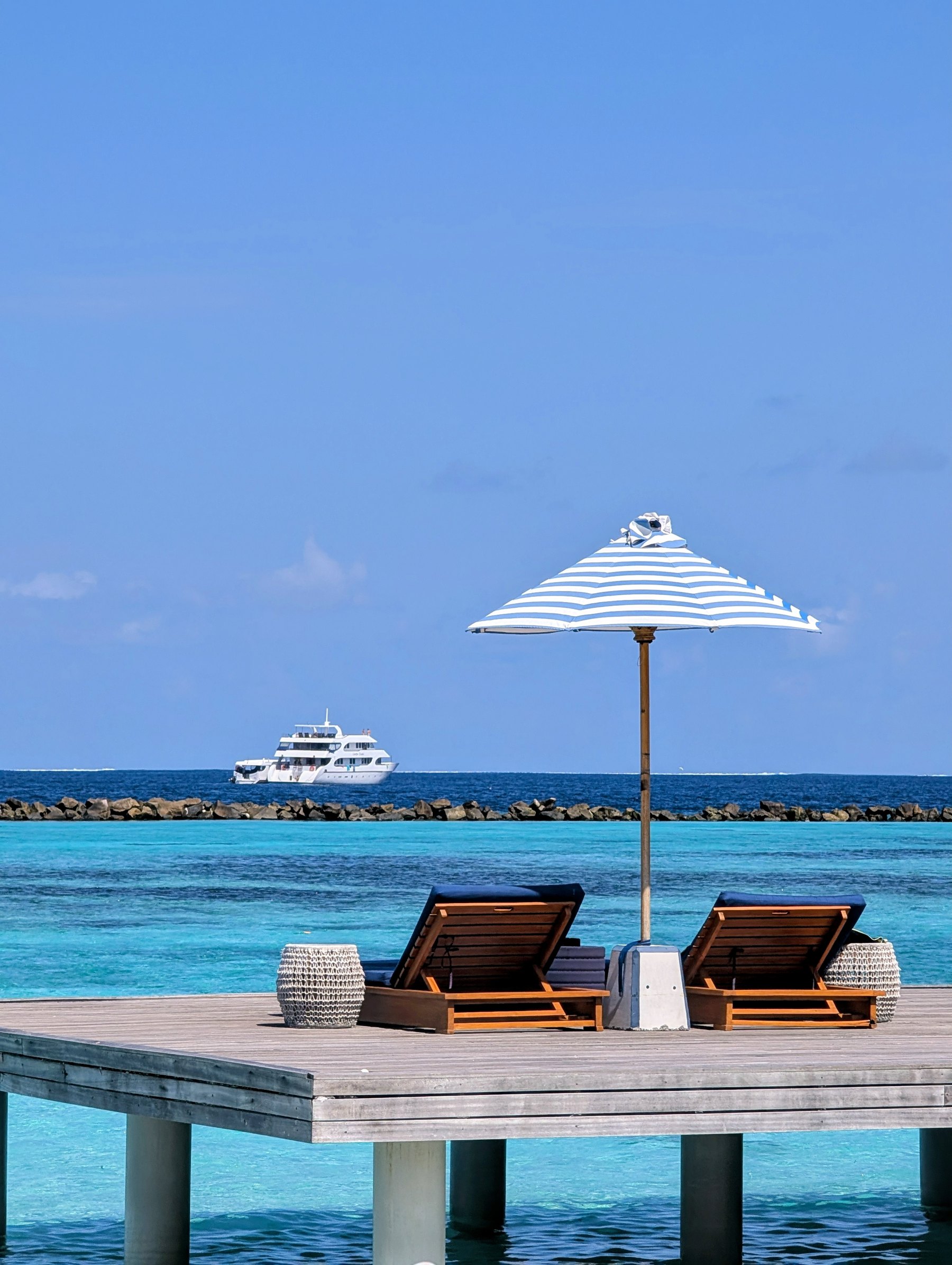
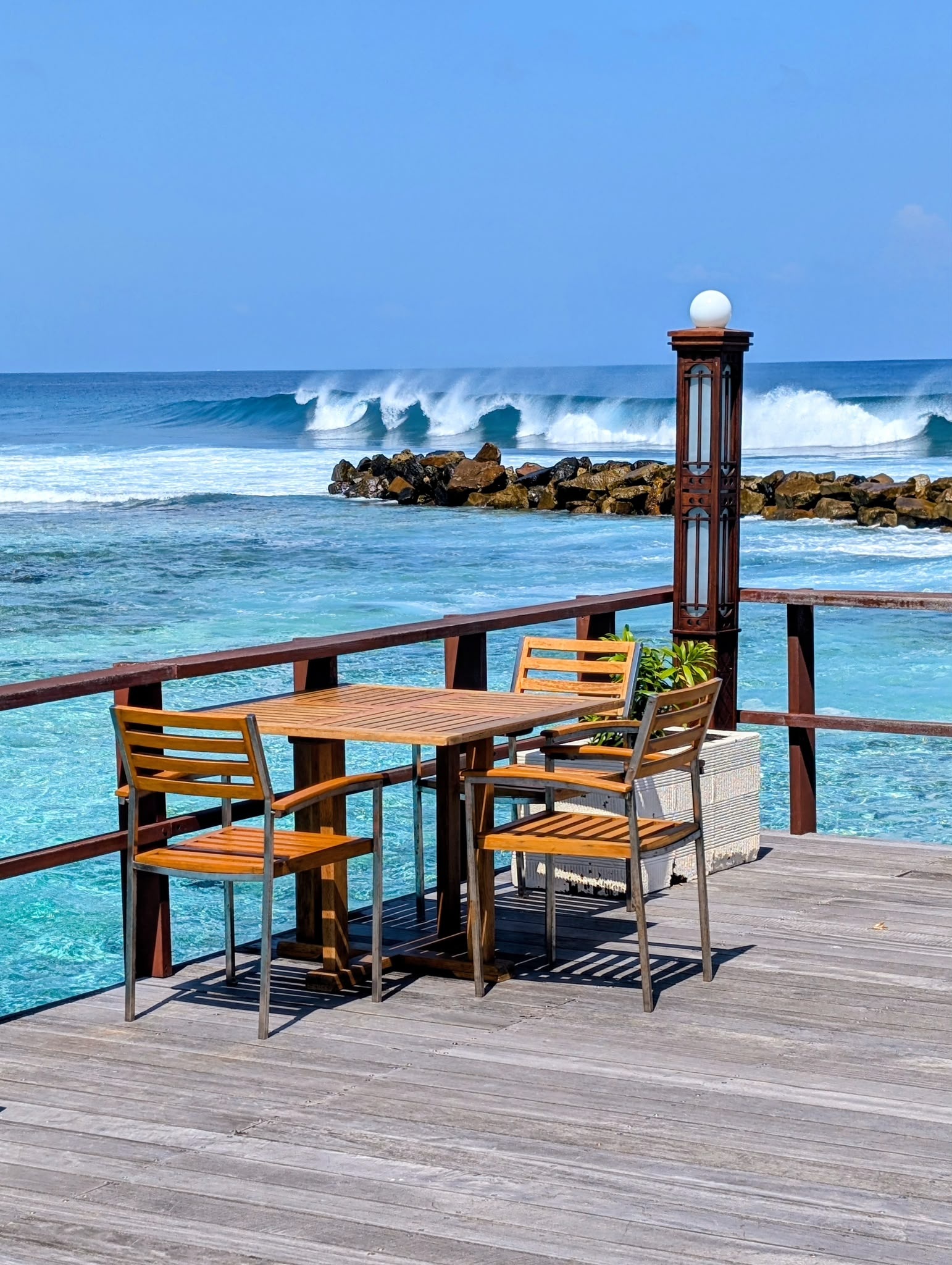
The island’s open-air spaces make the shoreline part of the day. In one view, a timber path leads through greenery towards the lagoon and over-water accommodation. In another, two loungers and a parasol occupy a small deck above clear water. They describe different ways to enjoy the same setting: being close to the island’s shared spaces, or finding a place to sit a little apart.
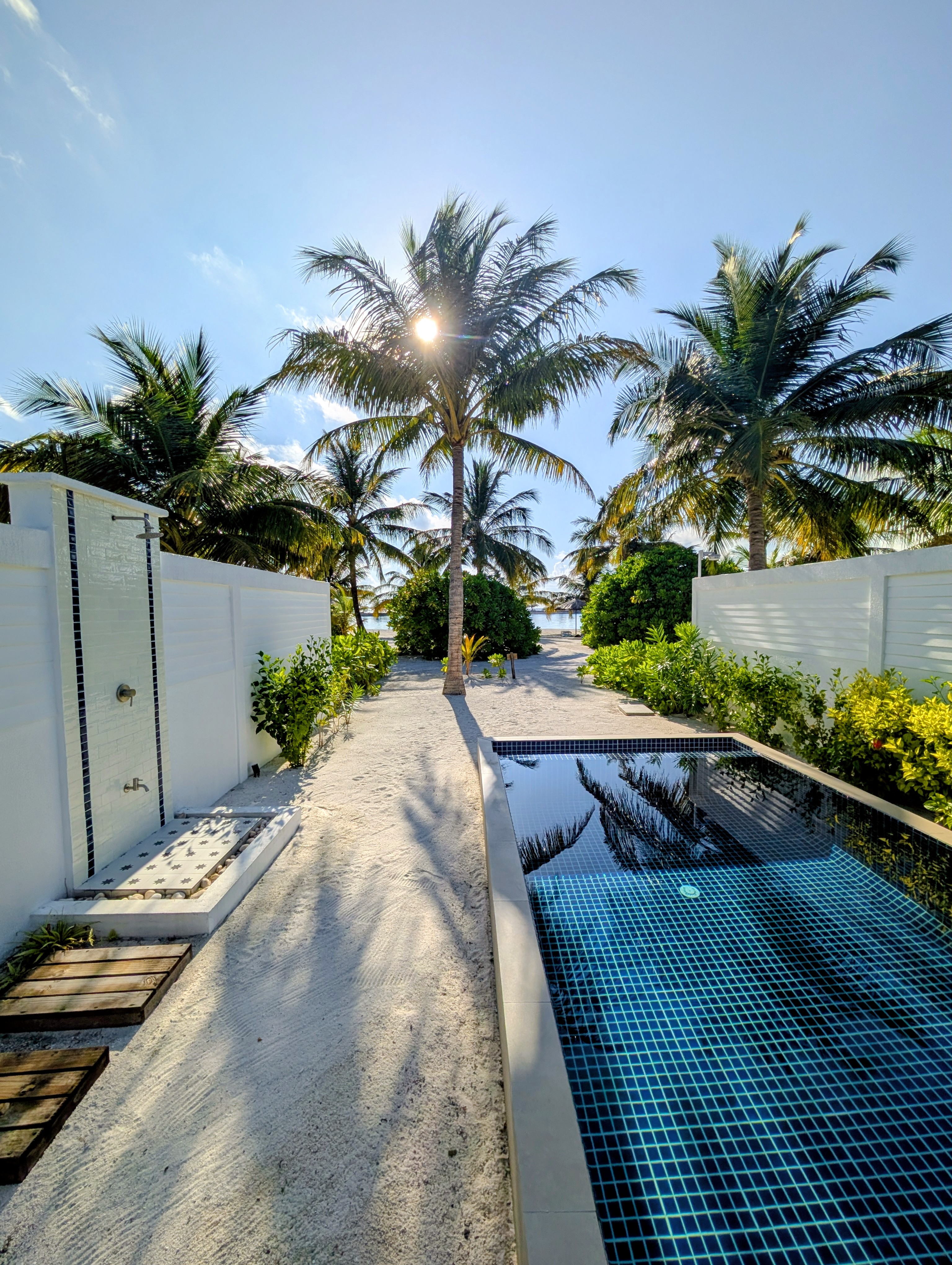
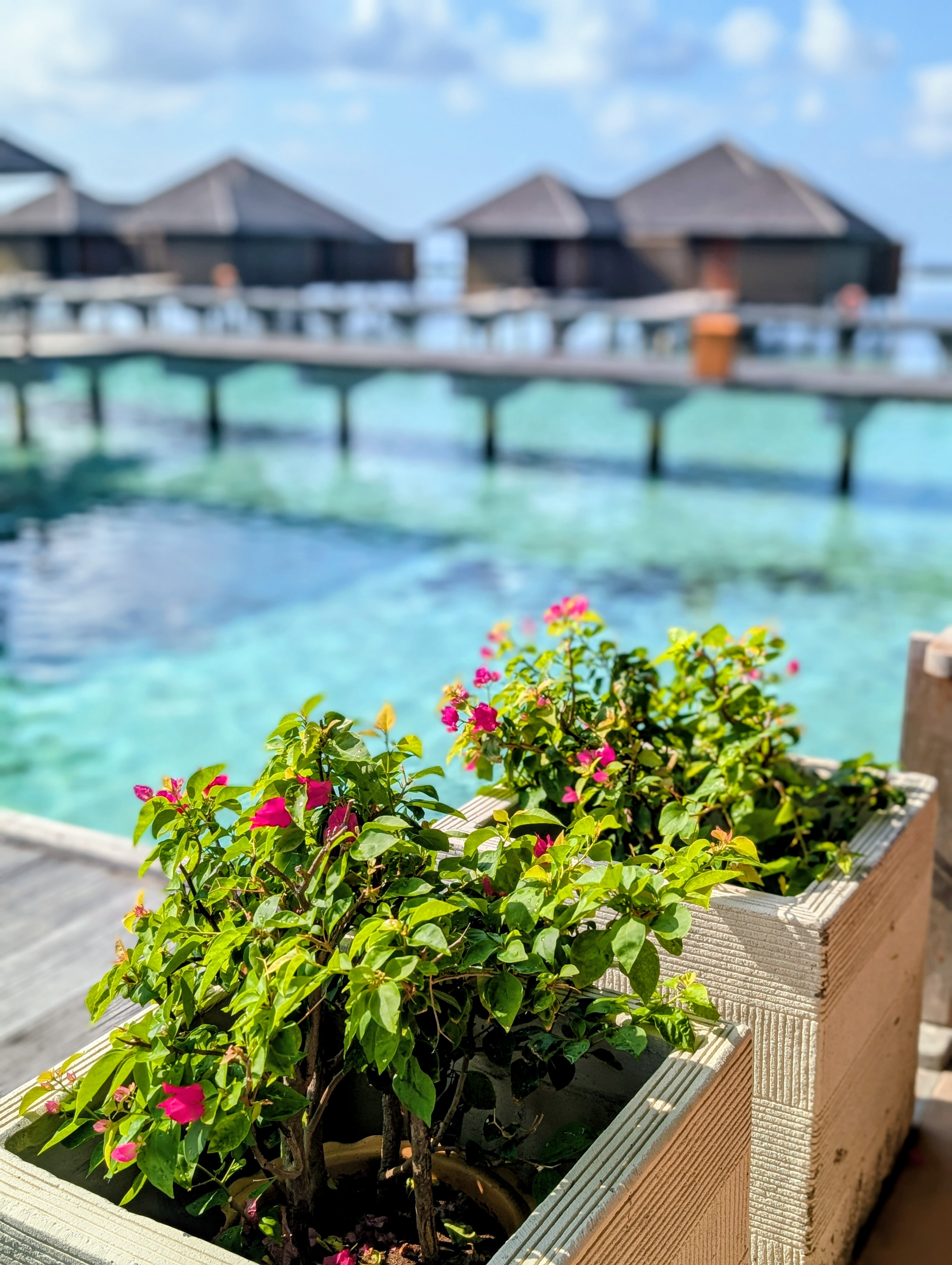
The private outdoor spaces offer another pace. A pool sits beneath the palms, with an outdoor shower and a sandy route towards the sea. Elsewhere, pink flowers frame the lagoon, with over-water villas beyond. These quieter details sit alongside the island’s more sociable spaces, leaving room to choose between joining in and taking time away from it all.
Meliá Koh Samui
Water, warm wood and a maritime thread give Meliá Koh Samui its island rhythm.
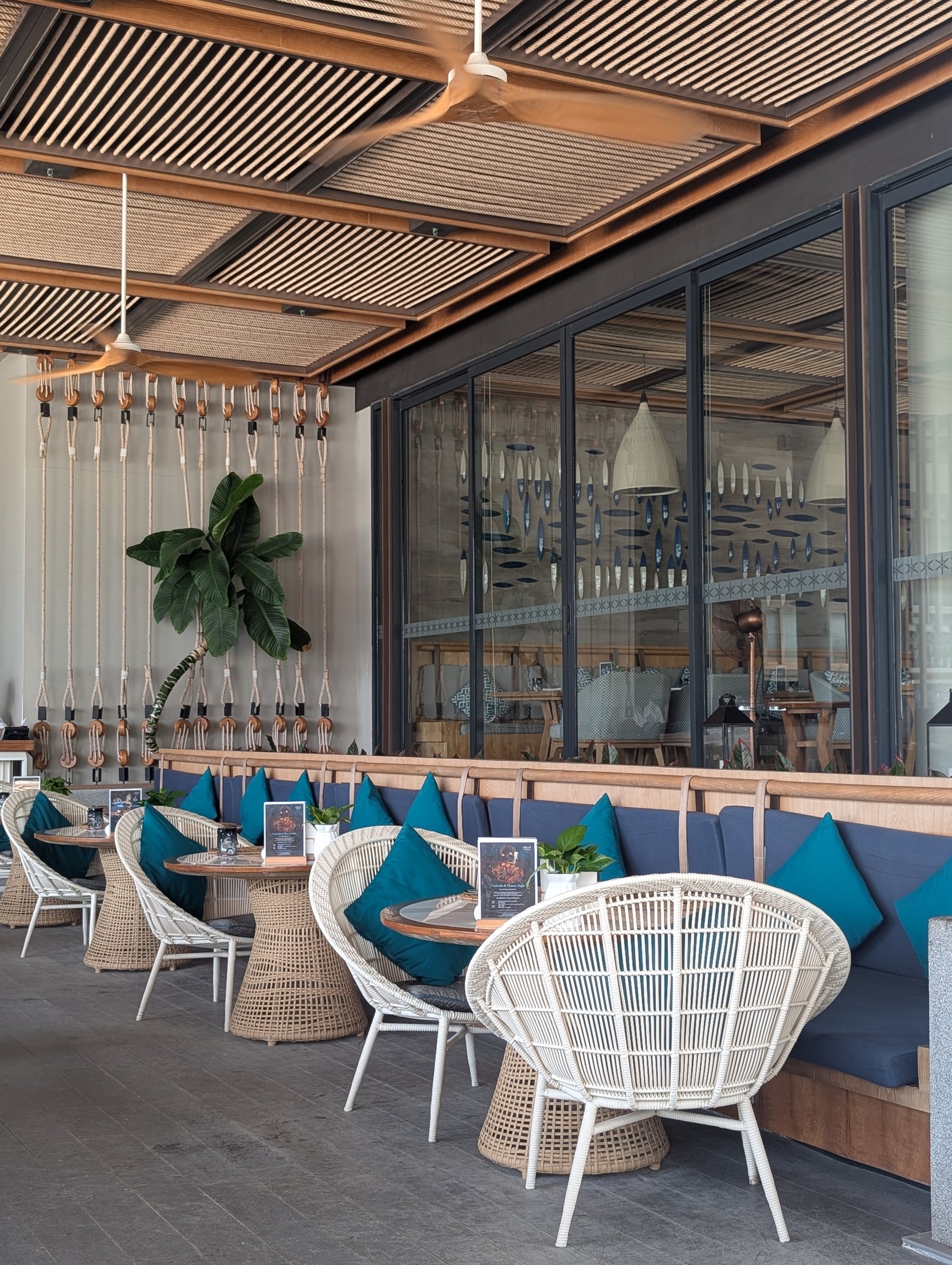
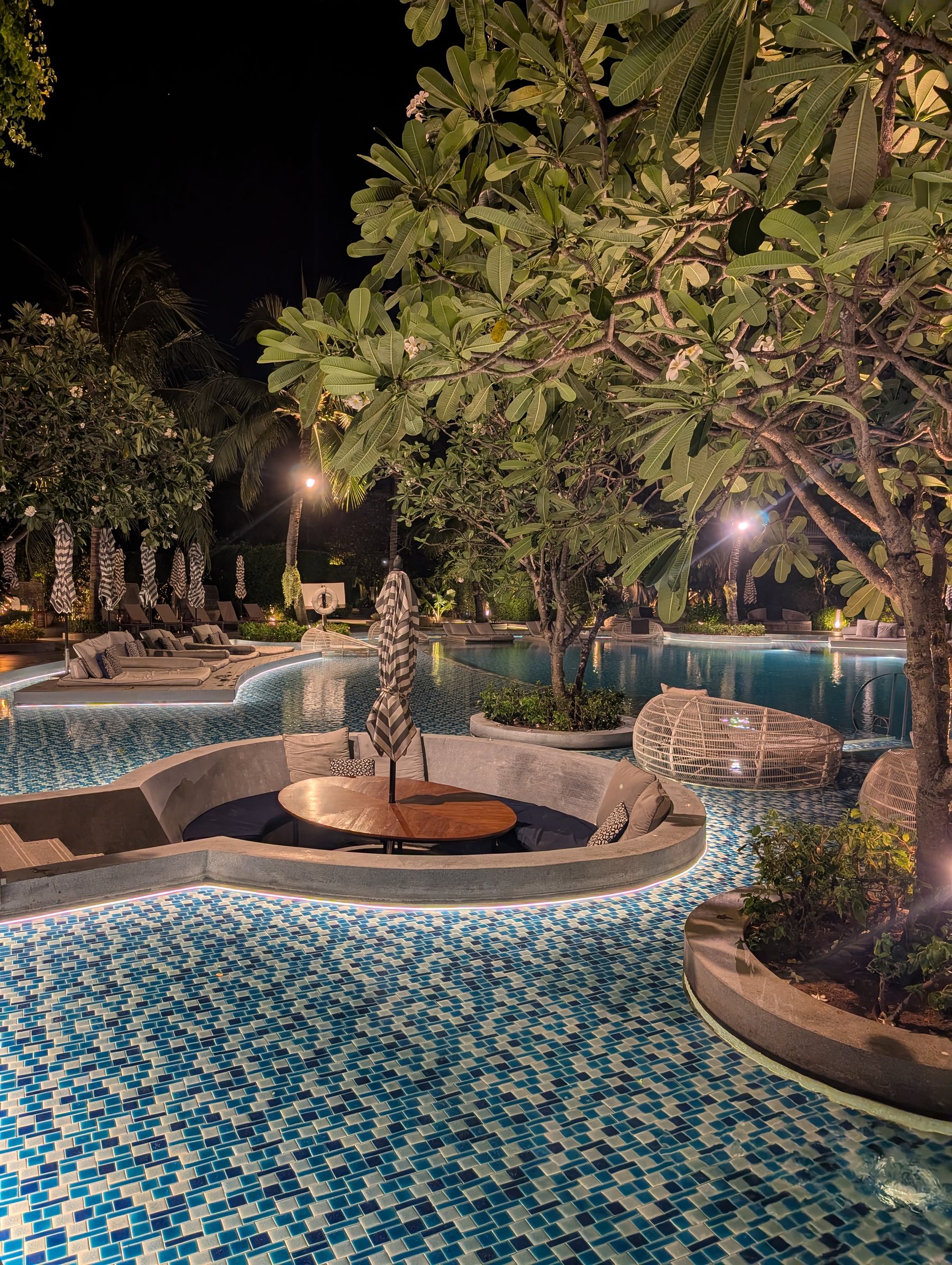
At Meliá Koh Samui, water shapes the day. The lagoon-style pool winds through tropical planting, with places to pause along its edge and rooms that open directly onto the water. It is an easy setting in which to trade a busy itinerary for a swim, a book and a long lunch.
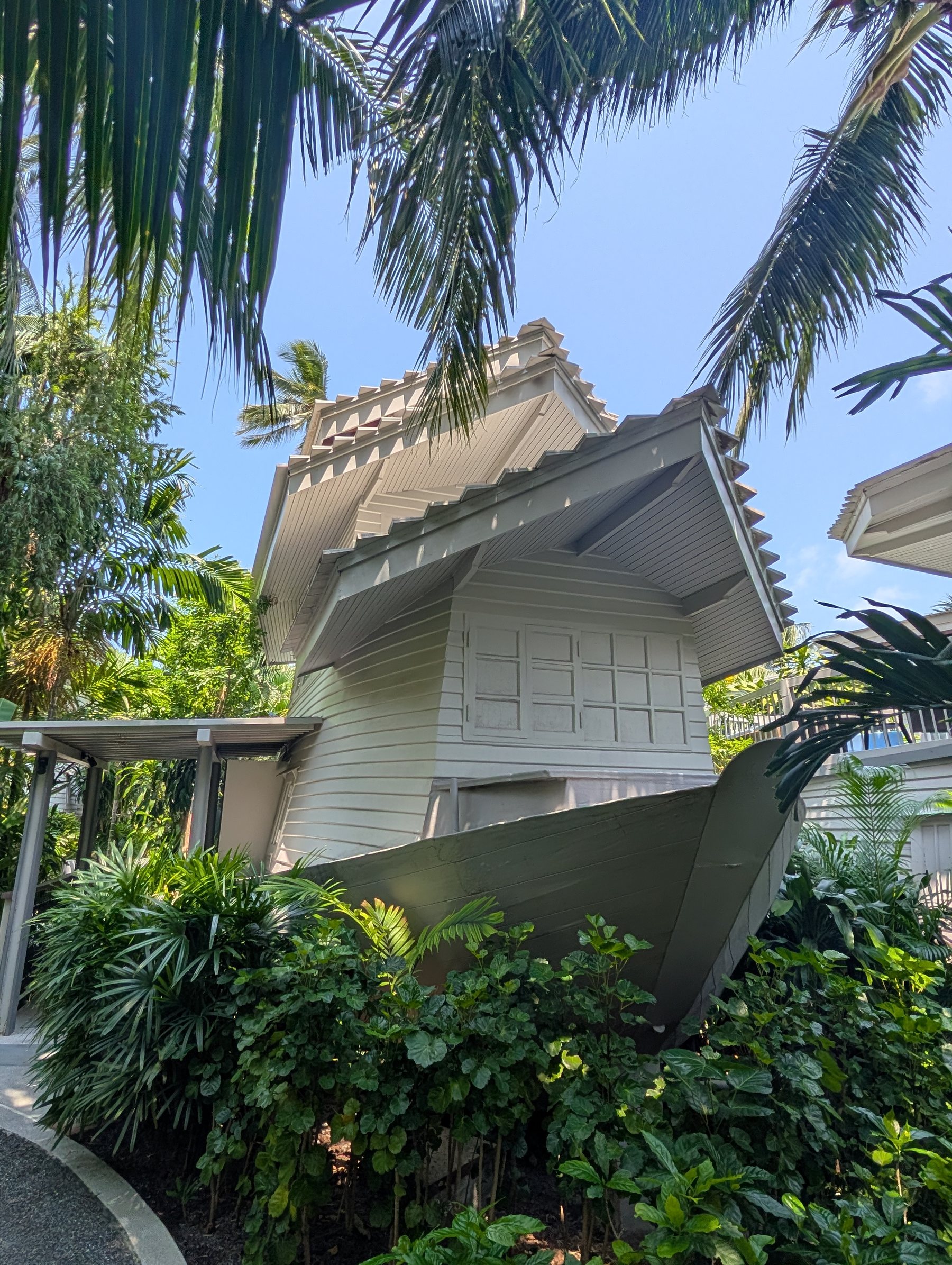
Inside, pale walls, warm wood and Thai details keep the rooms light. The more distinctive accommodation looks back to the island’s maritime history: The Level Boat Suites occupy converted teakwood rice barges. Their unusual form gives the resort a sense of place beyond the familiar language of a beach hotel.
A CLOSER LOOK
Koko Kitchen provides the breakfast setting; Breeza takes dining towards the sea, bringing Mediterranean and Asian influences together beside the shore. The contrast between the bright dining spaces and the softer evening atmosphere is part of the pleasure of staying put.
Away from the pools, YHI Spa offers a quieter retreat. Families have the children’s club and water-play facilities, while adults can seek out the beach club or a slower afternoon in the spa. The appeal is in that choice: a holiday with enough going on for different generations, without everyone needing to spend the day in the same way.
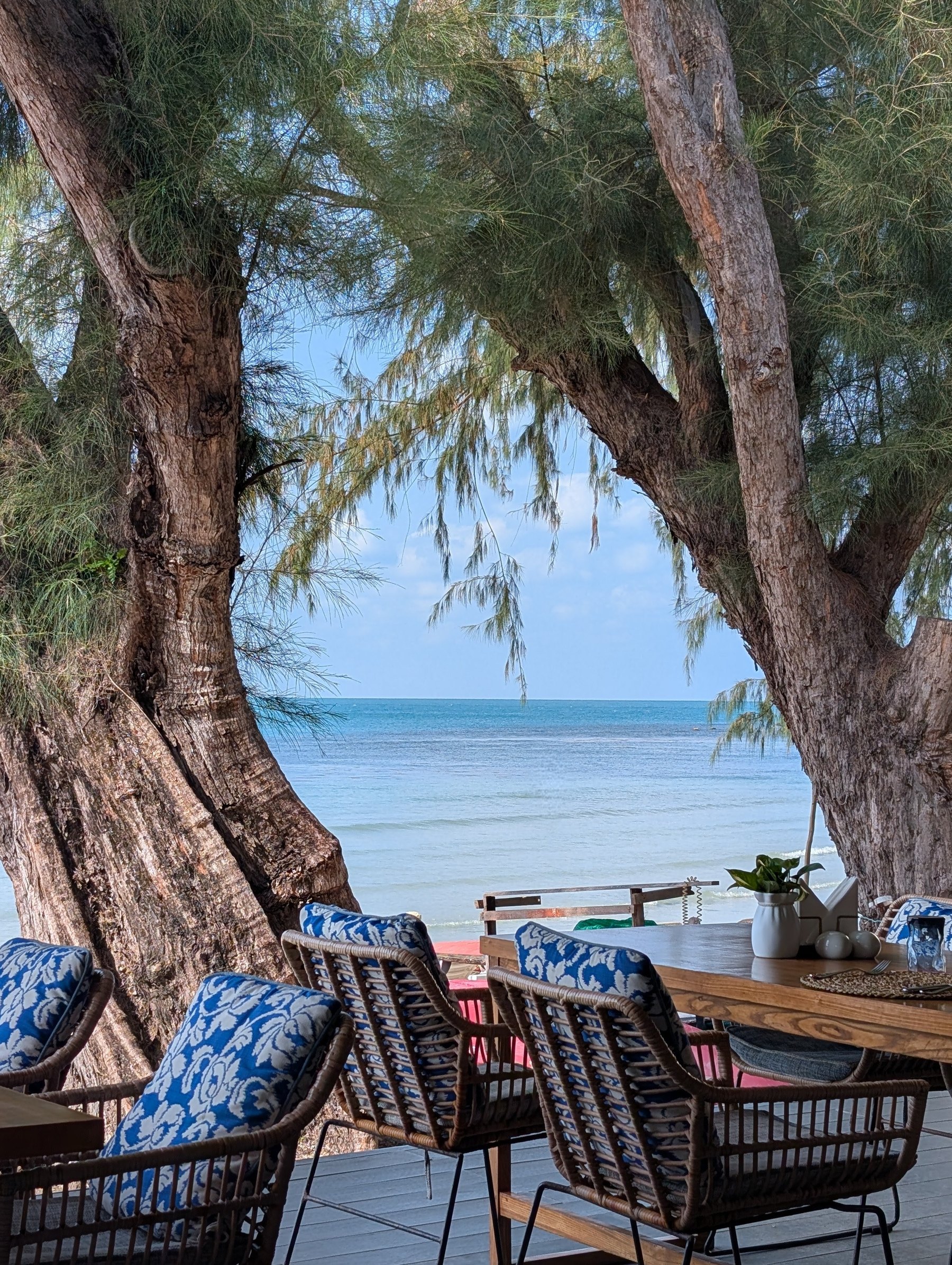
The shore provides a useful counterpoint to the resort’s pools. Tables sit under the trees, with branches framing the sea and shade making somewhere to linger over a meal. The photograph is appealing for what it leaves in view: the sand, the water and the trees themselves. There is no need for the setting to compete with the coastline.
The boat suites are the most memorable expression of the resort’s design. Their curved forms and timber details sit among the greenery, bringing a maritime reference into an otherwise contemporary holiday setting. They give the accommodation a story of its own. For travellers choosing between room styles, that is a different proposition from direct pool access: one prioritises a distinctive place to sleep, the other the ease of stepping out towards the water. Neither needs to define every hour of the stay.
Silavadee Resort & Spa
Natural materials and a rocky shoreline put the landscape at the heart of Silavadee.
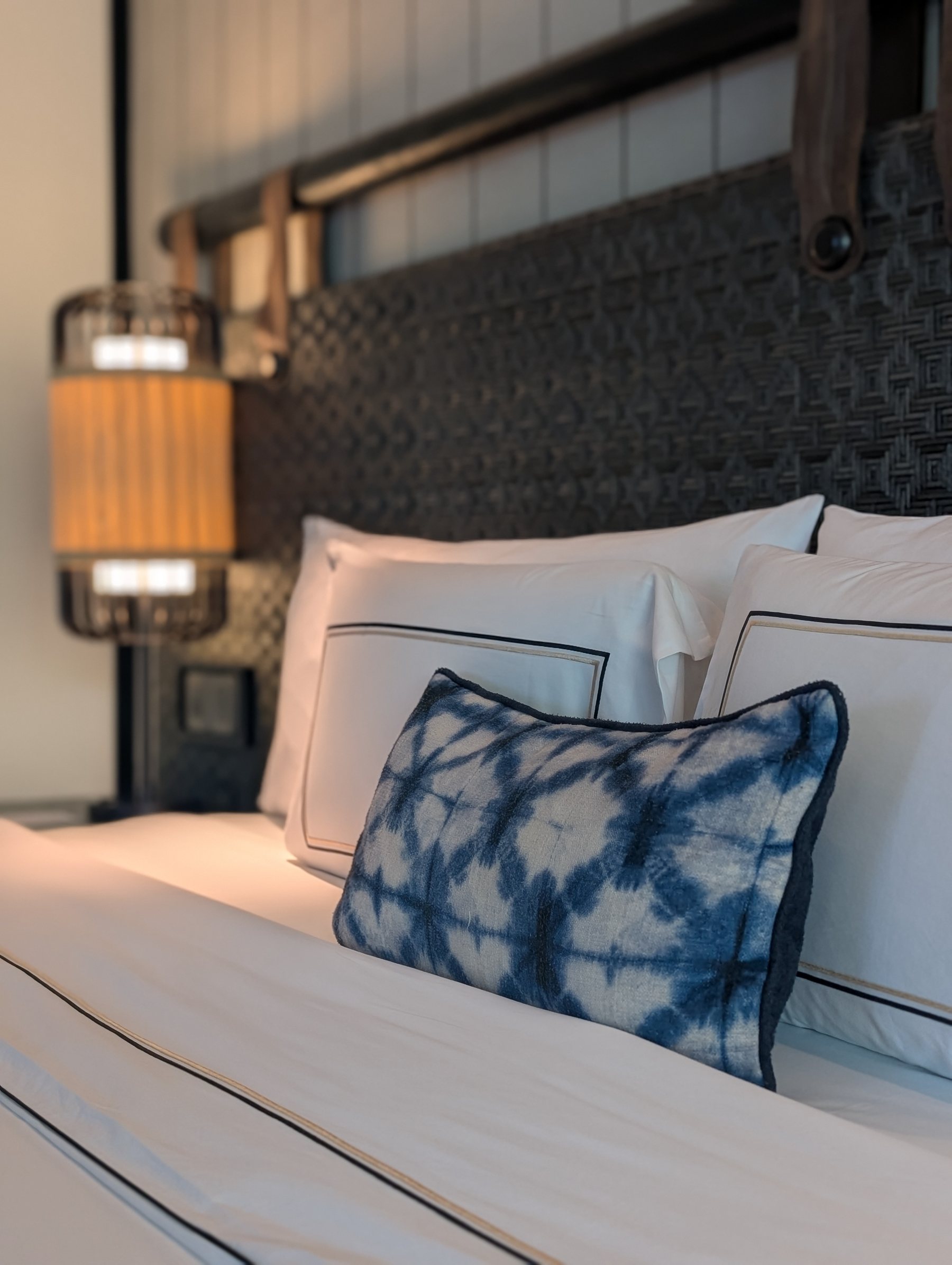
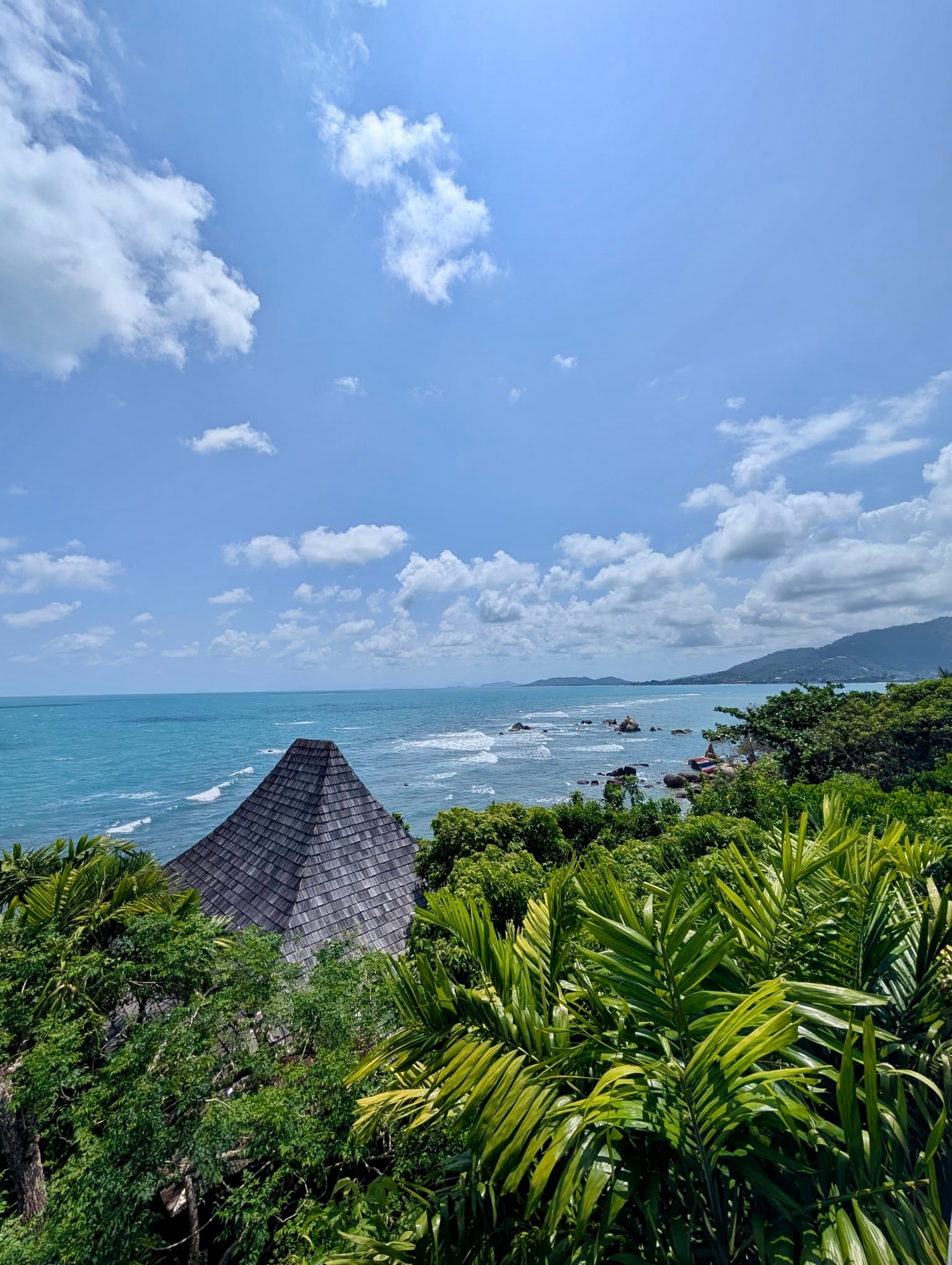
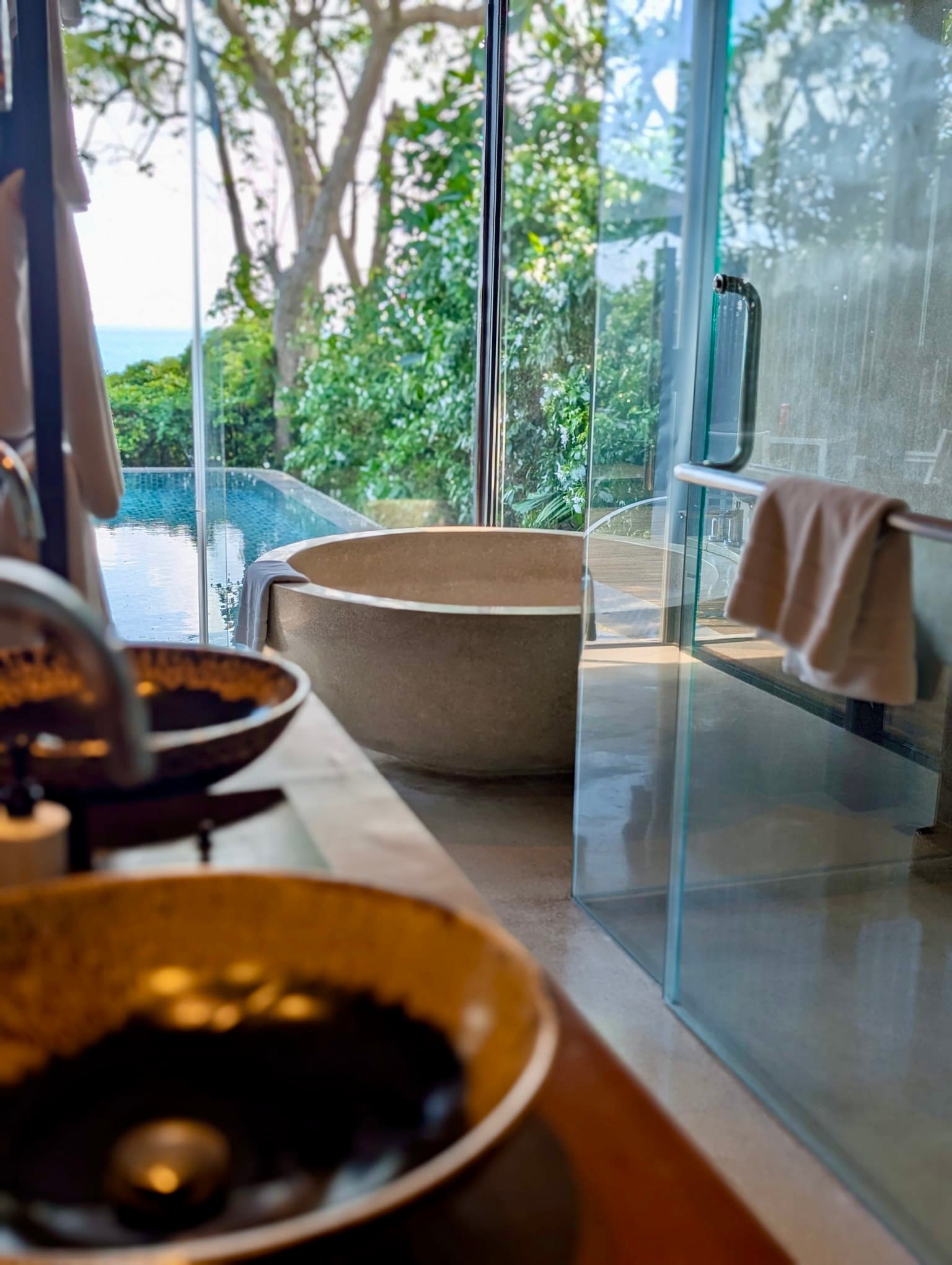
Silavadee’s setting does much of the talking. Rocks, trees and the sea frame a resort whose rooms and villas favour teak, natural fabrics and a distinctly Thai palette. The architecture works with the coastline rather than trying to screen it out.
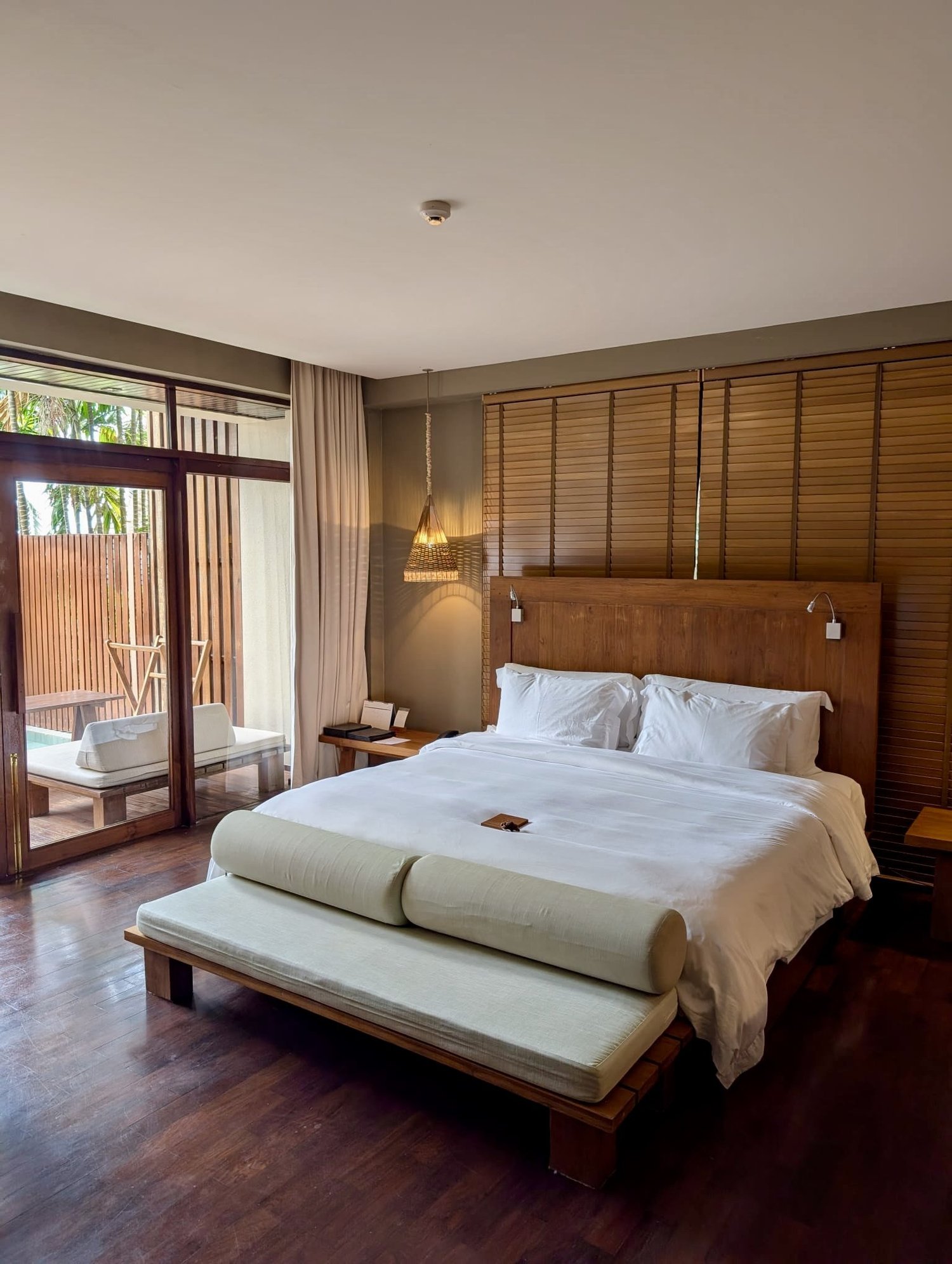
There are deluxe rooms with outdoor Jacuzzis and private-pool villas along the cliff edge. The choice changes the scale of the stay, but the common thread is a close relationship with the landscape. Looking out from the room, or settling beside the water, the island remains the main event. This is a place for travellers who want their surroundings to set the pace.
A CLOSER LOOK
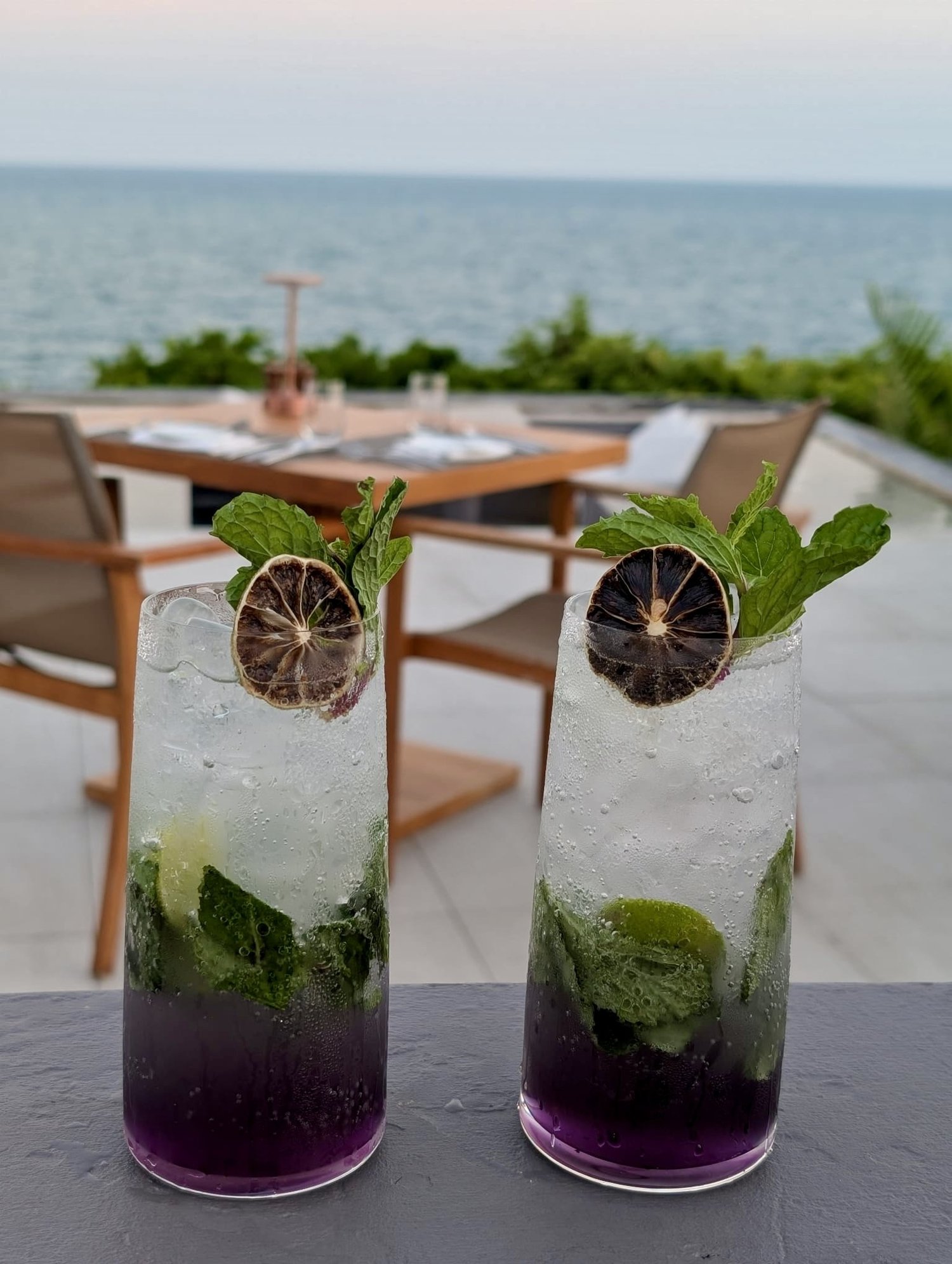
The Height brings Southern Thai cooking into a glass-walled setting above the ocean. Moon offers another dining perspective, while the resort’s evening spaces make a case for staying close to home after sunset. The views are part of the meal, rather than a backdrop to hurry past.
Two infinity-edge pools continue that connection with the horizon. For time away from the sun, Silavadee Spa offers Thai therapies and contemporary treatments in private rooms. Between the coastline, the pools and the quieter spaces indoors, the resort’s character is consistent: natural materials, sea air and room to switch off. It suits a stay built around being here, rather than doing everything elsewhere.
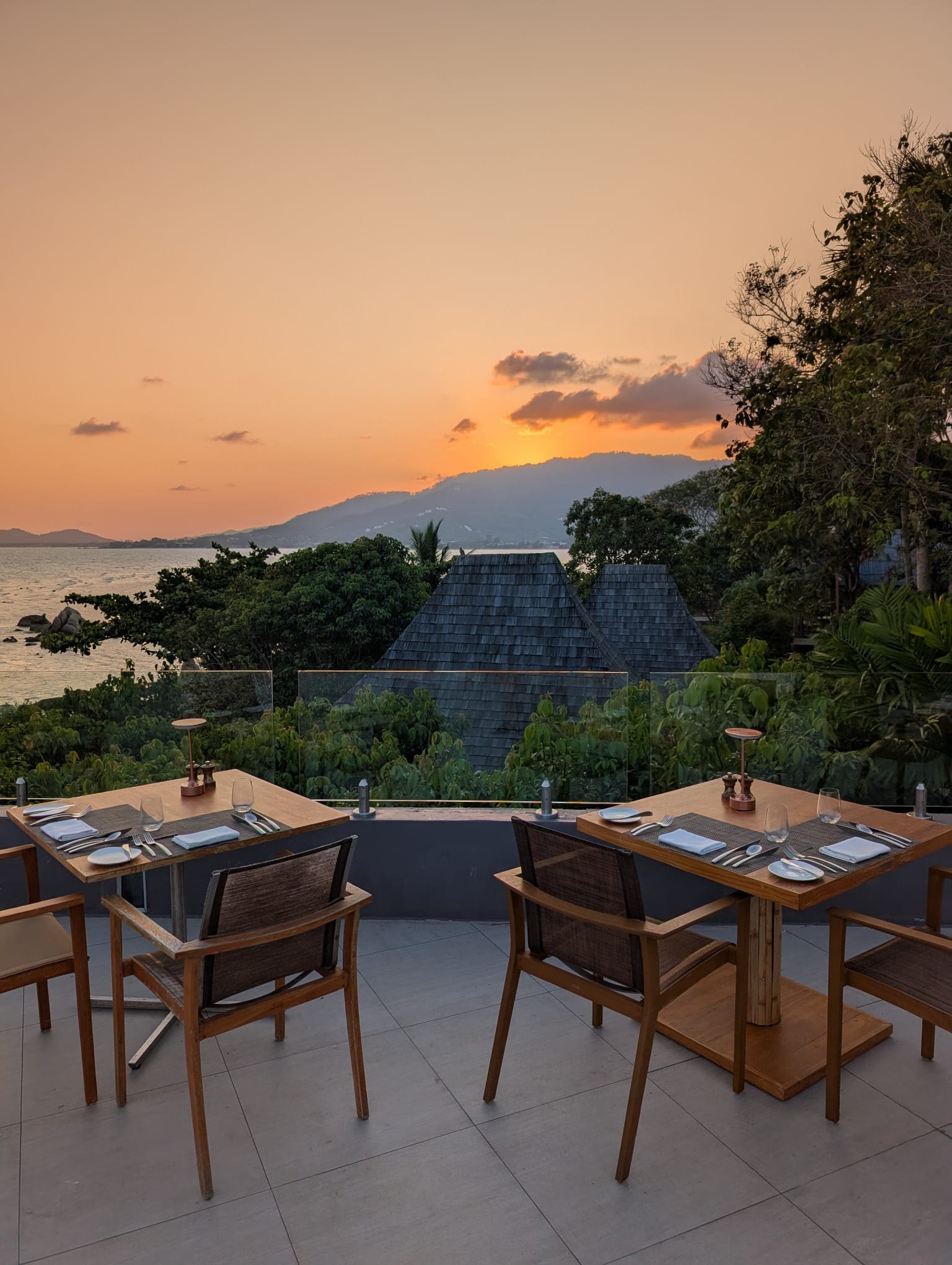
The photographs show how much the setting contributes. Beyond the rooflines and tropical planting, the sea occupies most of the view; it is the element that draws the different spaces together. There is a strong sense of looking out, whether from a terrace or a place to sit with a drink. The building is part of the composition, but it does not have to be its centre.
At the end of the day, the change in light supplies a different atmosphere without a change of address. Outdoor tables face the fading sky, with the landscape becoming quieter around them. That is the attraction of staying somewhere whose evening spaces have been thought through as carefully as its bedrooms: dinner can feel like a continuation of the day outside, rather than a reason to leave the setting behind.
Villa Kelapa
At Villa Kelapa, the pleasure is having a home together — and the space to set your own pace.
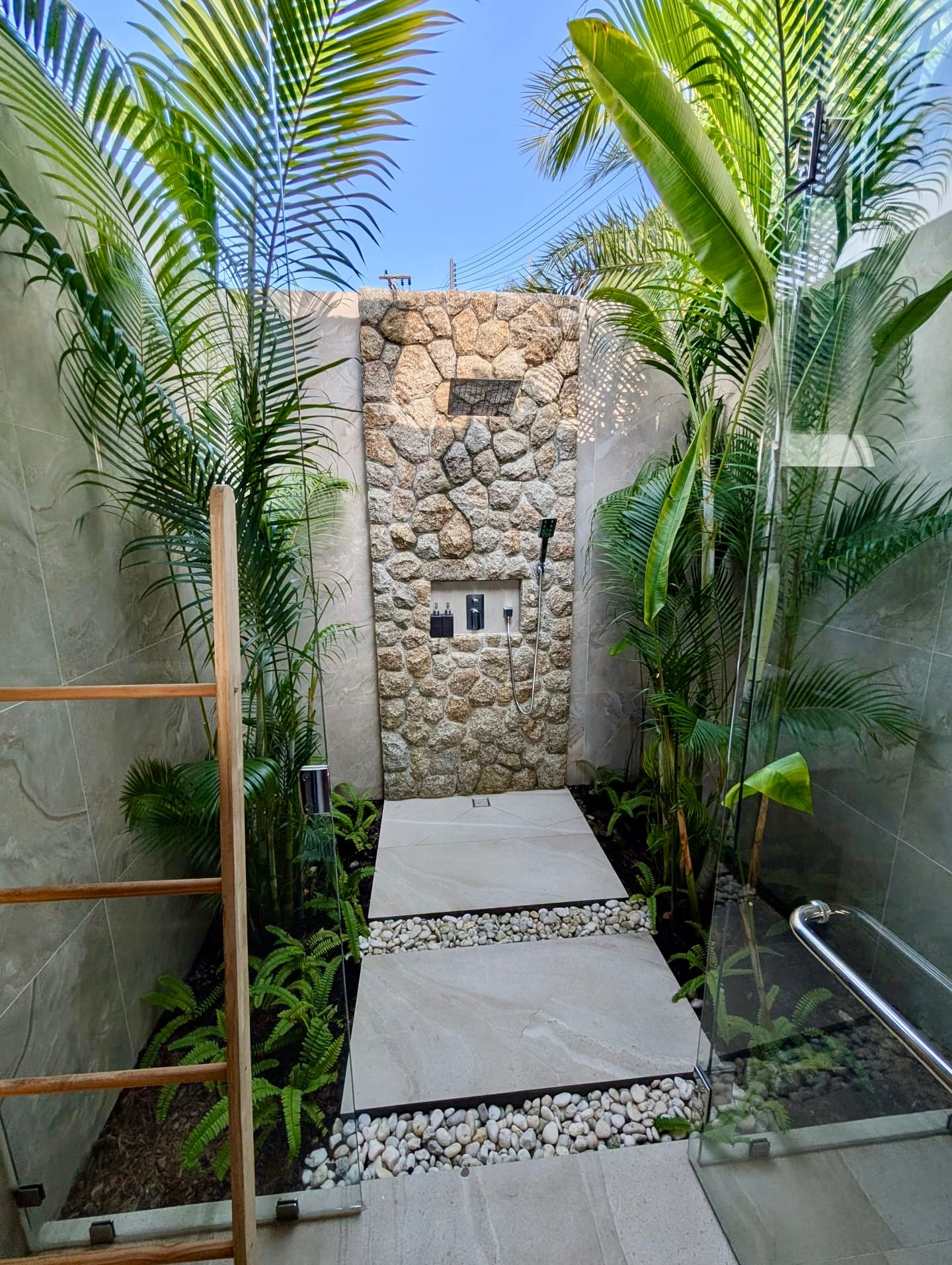
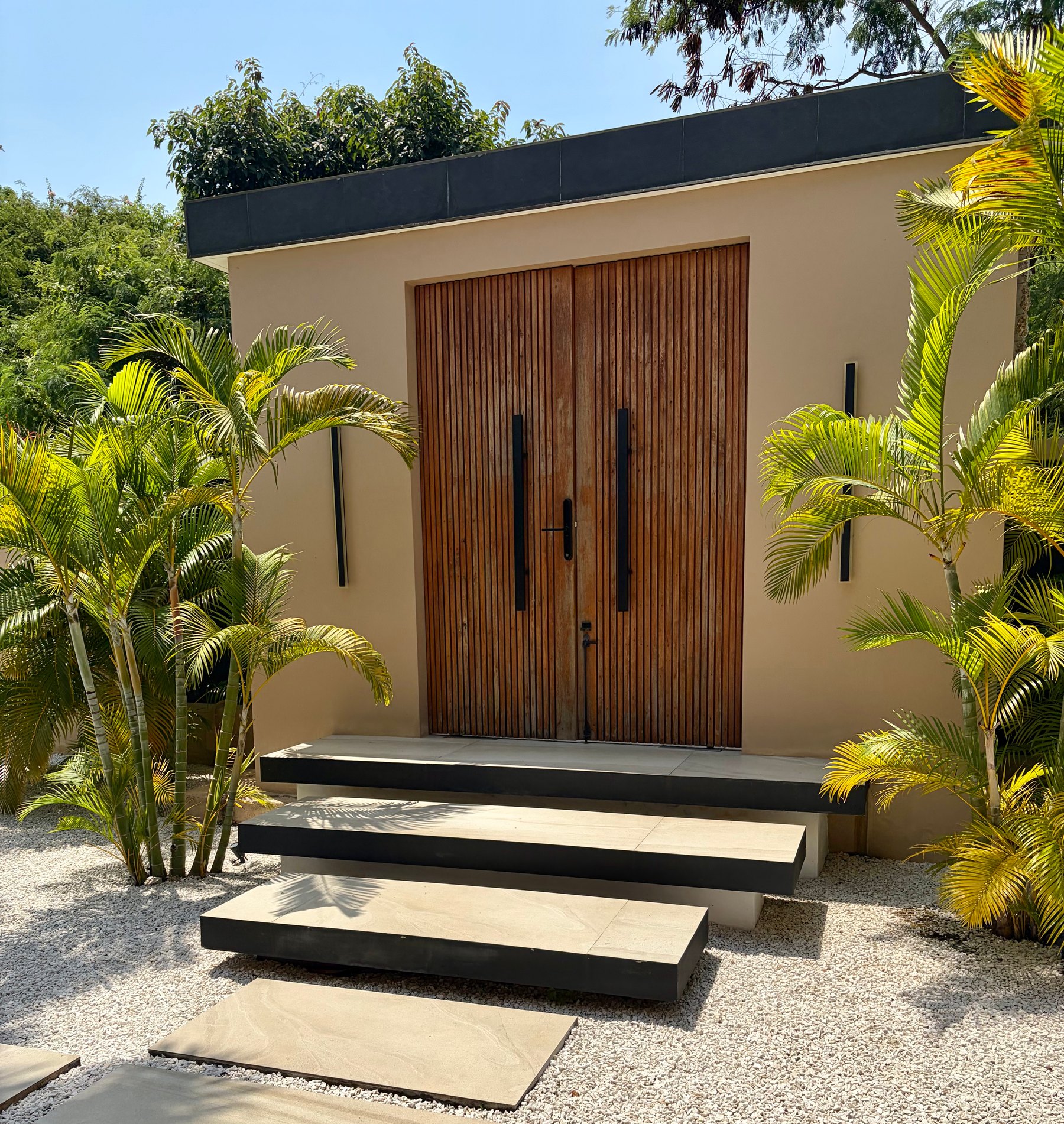
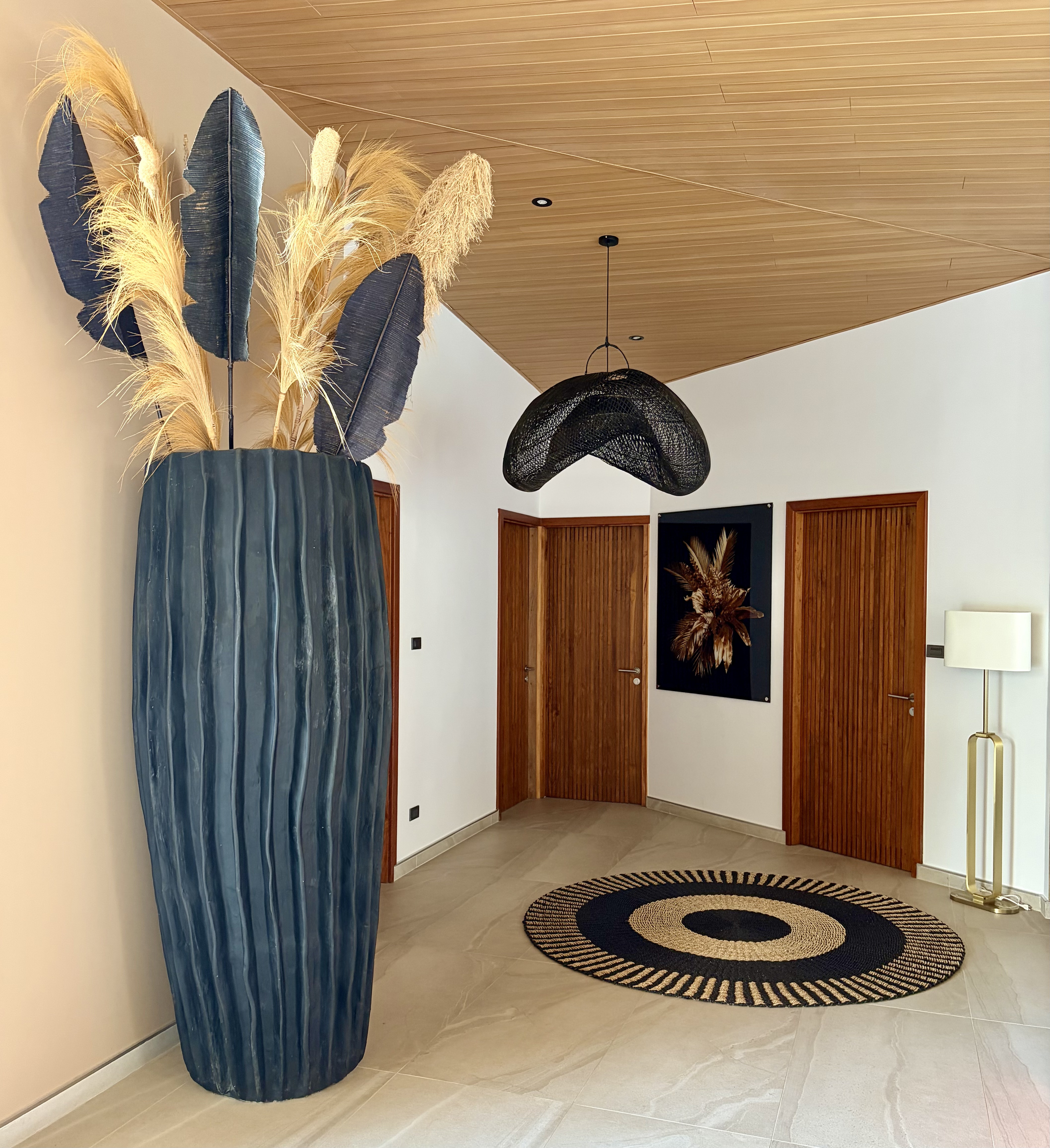
Villa Kelapa offers a different version of Koh Samui: a private home with space for a group to settle into its own routine. Four bedrooms give everyone somewhere to retreat, while the open-plan living areas bring the household back together.
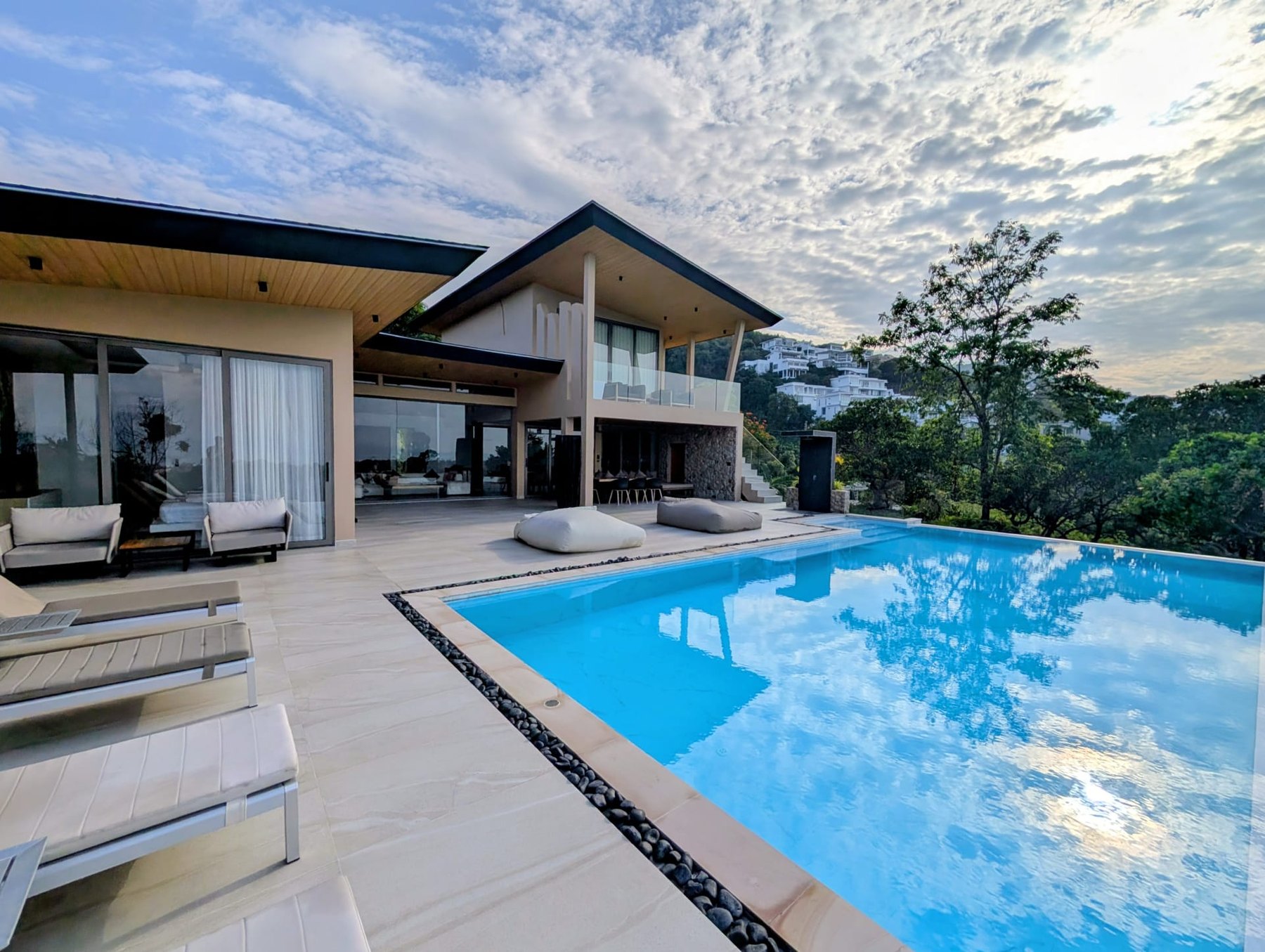
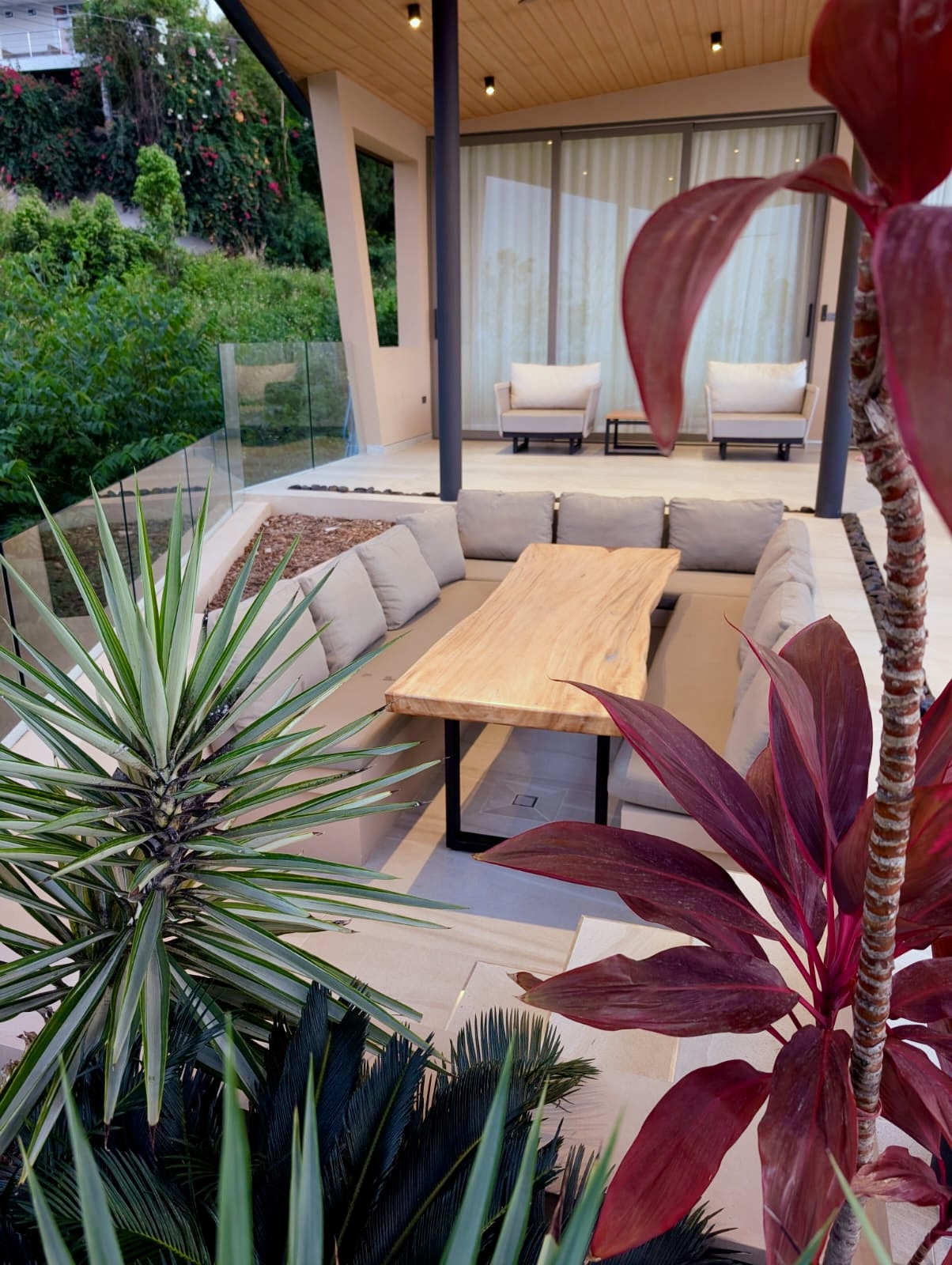
Glass doors connect the interior with a broad terrace, keeping the view present even when the day moves indoors. Outside, the infinity pool is the natural gathering point. The appeal is less about a timetable of activities than the freedom to decide together: breakfast in the kitchen, an afternoon by the pool, or another hour looking out towards the sea. The house makes those simple decisions feel like the holiday itself.
A CLOSER LOOK
A western-style kitchen with a central island makes self-catering part of the villa’s independence. For guests who prefer to leave the cooking to someone else, private-chef meals offer a way to enjoy Thai dishes and international favourites at home.
The setting feels removed from the island’s busier stretches, while access to the main ring road keeps exploring practical. That balance matters for families and friends sharing a stay: some can head out while others remain beside the pool. Villa Kelapa’s strongest proposition is this combination of shared space and personal freedom. It is a base for spending time together, with enough room to avoid doing every part of the holiday as a group.
The pool terrace is the clearest expression of the villa’s appeal. The house opens towards the water, with a shaded area close by and a broad outlook beyond the edge of the terrace. It gives a group a natural place to gather without insisting that everyone spend the day in the same way. Someone can swim while another reads; the shared space holds those quieter, separate moments together.
For a family or a group of friends, that freedom is often what makes a private villa worth choosing. Meals need not follow the same pattern every day, and going out can be a choice rather than the default. The accommodation supports a more domestic kind of luxury: enough space for everyone, a view that remains present, and the chance to spend time together without arranging every hour. The best itinerary may be the one the household finds for itself.
THE PEOPLE BEHIND THE PAGES
A magazine, a community and a clearer way for hotels and creators to work together.
STAY. began with an idea: bring the people who discover a place, the people who tell its story and the people who make a stay possible into one considered community.
Our team brings together experience in travel, tourism, freelance content and hotel partnerships, alongside expertise in websites, search and social media. Those complementary perspectives shape the publication and the platform behind it.
For us, a creator partnership starts with the quality of the work. A clear point of view, thoughtful photographs and useful writing give a hotel story substance. An audience matters, but so does the care taken to make something worth reading or watching.
The platform gives those relationships a home. Creators can introduce their work, find suitable hotels and keep conversations and confirmed stays together. Hotels can discover creators and offer opportunities, with a clearer understanding of what a STAY. partnership involves.
The editorial work is created for STAY. Our team reviews the photographs, films and writing, publishes selected work on our channels and supplies the approved photographs to the hotel. The magazine brings chosen stories together in a quarterly issue.
We also want to help people develop. Our guides and mentoring give creators a place to work on their photography, storytelling, personal brand and digital presence, whether they are preparing a future application or refining an established body of work.
Original work, thoughtfully made.
Selection, guidance and publication.
Hosted experiences and approved photography.
YOUR NEXT CHAPTER
For the work you want to make, and the creator you want to become.
EMMA / TRAVEL & STORYTELLING
With around 15 years in travel and tourism, experience in freelance travel content and extensive hotel negotiations, Emma helps creators think about the story, the property and the approach. Bring a portfolio, a pitch or a question about working with hotels.
JOHN / DIGITAL & TECHNICAL
John’s focus is SEO, websites, social media, systems and the technical side of a creator business. Explore how you present your work online, make your website more useful and organise the tools behind your content.
Individual mentoring
£50 per hour · minimum one hour
A joint review with John & Emma
Two perspectives on your work · enquire for pricing
TEN PRACTICAL CREATOR GUIDES
Photography, travel video, storytelling, audience growth and personal branding, with practical exercises and saved checklists in your portal. Develop stronger work for your next application; buying a guide does not guarantee acceptance or hosted stays.
£10 per guide / All ten for £80 Save £20 against buying separately.
For hotels / Discover STAY. creators, offer a hosted stay and speak to us about working with travel content creators.
Start a conversation · hello@staythemagazine.com ↗CITY. COAST. COUNTRYSIDE.
Extraordinary places.
Considered stories.
A community to share them.